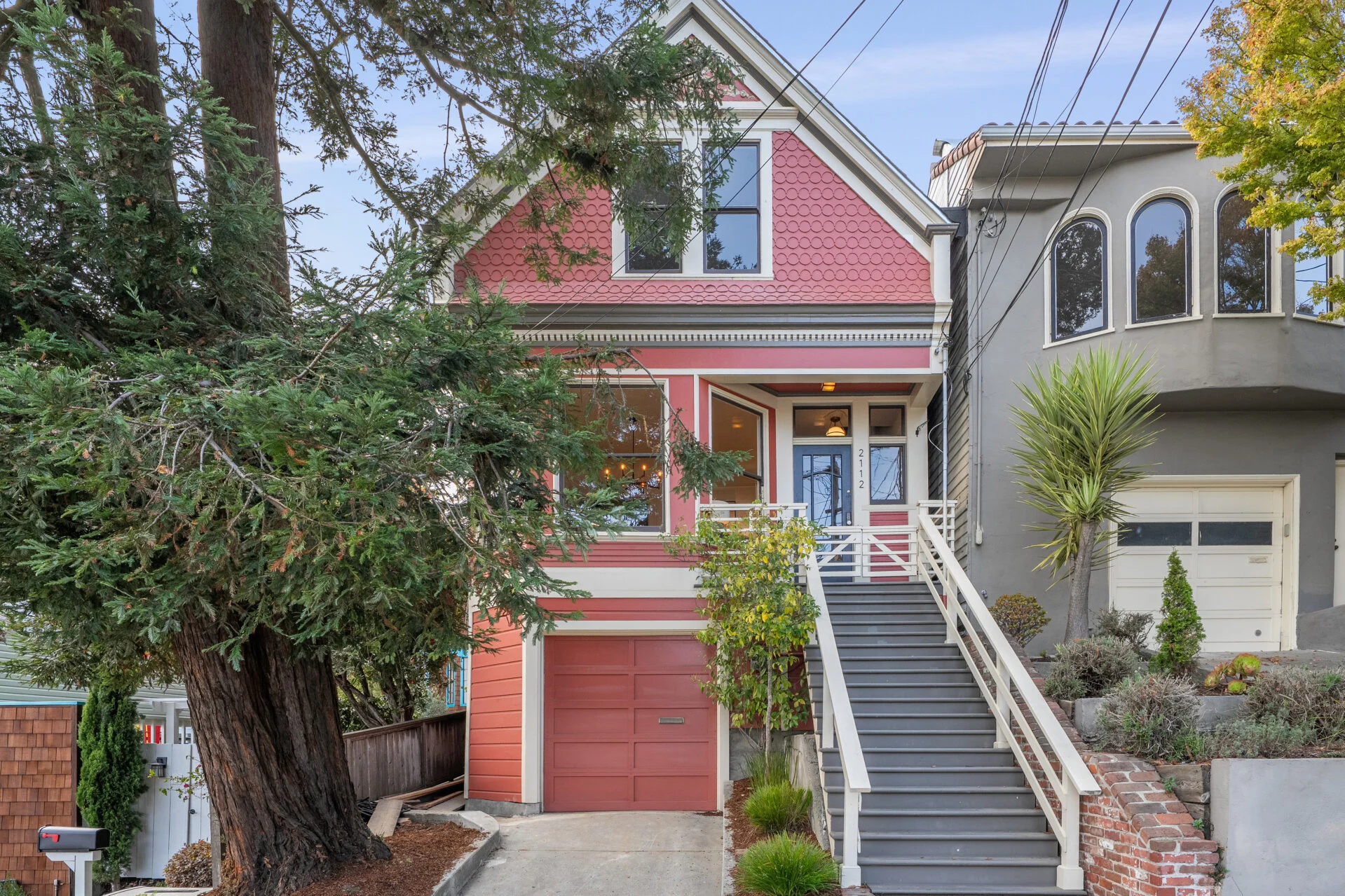
How a single question asked before listing day — one most agents skip — turned a potential deal-killer into 13 offers and a $2,651,000 sale.
Before my team touches staging, photography, or pricing on any listing, I ask for one thing: past disclosures.
Not because I expect to find problems. Because if there is something lurking in the history of a home, I want to know about it before a buyer’s agent does — before an inspection report surfaces it mid-transaction, before a nervous buyer walks, before a deal falls apart at the worst possible moment.
Most agents don’t make this request. It’s not required. It adds a step. And when everything looks fine on the surface, it’s easy to skip.
I don’t skip it.

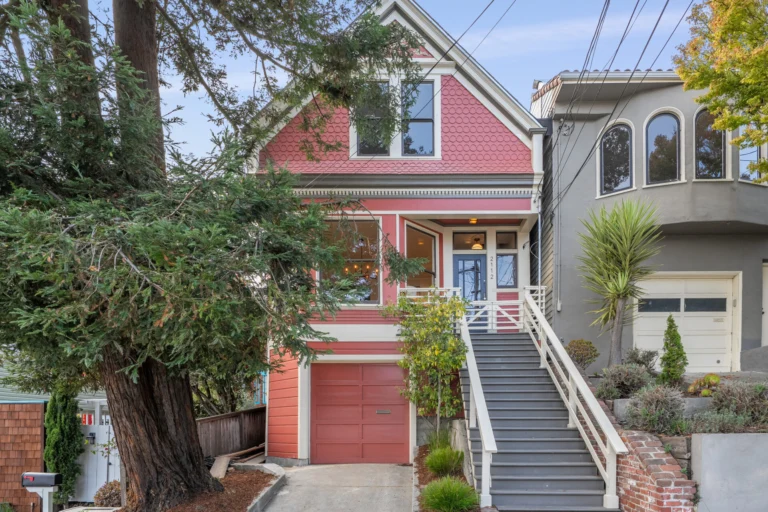
On this Noe Valley listing, the past disclosures revealed a foundation issue. The kind of thing described in inspection language that makes a buyer’s agent uncomfortable, and makes buyers start doing mental math about risk.
Left unaddressed, it would have done exactly that. Buyers would have seen it, flagged it, and either walked or come in with aggressive credits. The uncertainty alone has a cost.
So before the home hit the market, I brought in a structural engineer. The assessment was clear: one section of the foundation needed to be replaced. Total cost: $15,000.
We fixed it. And because I have long-standing relationships with contractors, the work was completed while the rest of the home prep was already underway — no delays, no overlap in timeline, no disruption to the launch.
By the time buyers walked through the door, the issue was resolved and documented. There was nothing to be uncertain about.

This is where I want to be direct about how my team works, because “full-service” gets thrown around a lot in real estate.
For us it means this: once you hand over the keys, you shouldn’t have to manage a project. We coordinate the contractors, the sequencing, the prep decisions. We keep you informed — you’ll always know what’s being spent and why — but you’re not the one making calls, chasing timelines, or figuring out who to hire.
You’re included in every decision. You’re just not carrying the weight of it.
The sellers on this listing had a tight timeline between moving out and the end of the fall sales season. In one month, the foundation work was completed, the floors were redone, the walls were painted, and the home was ready to photograph. They described being able to “relax and let the team do their thing” which is exactly the point.
Every home has something. The job is figuring out what it is and building the entire presentation around it with the specific things that make a particular buyer stop and pay attention.
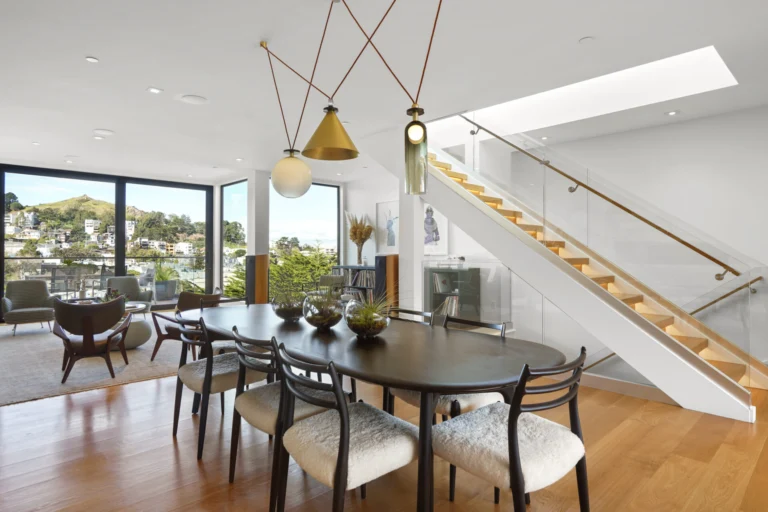
For this home, it was the backyard. Unusually large for San Francisco, directly accessible from the main living space, and genuinely rare at this price point. That became the lead.
The floor plan was also notable: bedrooms upstairs, which isn’t common in homes at this price in the city. Many buyers prefer this.
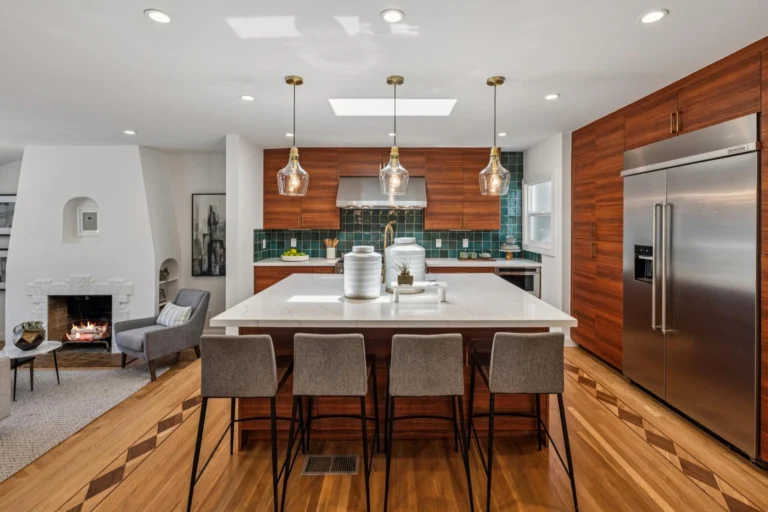
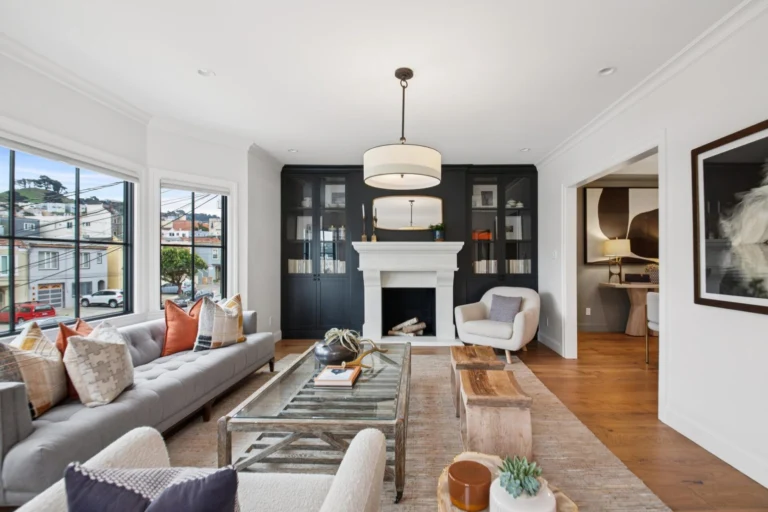
The lower level had lower ceilings and a slightly separate feel from the main living space. Rather than treating that as a drawback, I made a deliberate choice to lean into the character of it — specific paint tones, staging that matched the vibe.
The home photographed beautifully. Buyers responded to it.

Going into offer week, I was anticipating a sale somewhere between $2.3M and $2.4M. The list price was set at $1,750,000. The home sold for $2,651,000 — 51% over asking.
But the pricing decision wasn’t made in a vacuum. It was calibrated to exactly what was happening in the market that specific week.
Several comparable homes were listing 30 to 60% below where they’d ultimately sell. That dynamic matters: when buyers see a home priced significantly under market, they gravitate toward it. If you price your home too high relative to others on the market at that moment, you risk buyers running toward the bigger perceived deal — even if your home is objectively stronger.
Pricing to protect a seller’s competitive position sometimes means pricing lower than you’d intuitively want to. The goal isn’t to signal value through the list price. The goal is to generate the conditions where multiple buyers compete and let that competition determine value.
That read only comes from being in the market week by week, across neighborhoods, across price points. It’s not something a formula produces.

The sellers on this listing found me the way a lot of San Francisco sellers do: they saw my name on signs in the neighborhood. They’d watched transactions happen around them and made a decision based on what they observed.
What they were picking up on is real, but it goes beyond any single neighborhood. The pricing dynamics in Noe Valley are not the same as in the Castro, or Bernal Heights, or Forest Hill. What moves a home quickly in Pacific Heights is different from what drives competition in the Sunset. Buyer psychology shifts block by block, season by season, week by week.
I track those micro-patterns: offer dynamics, days on market, list-to-sale ratios, what’s driving buyer behavior right now across every neighborhood I work in. Not from a dashboard. From doing transactions.
That’s the knowledge base that informed every decision on this listing: what to fix, how to price it, what to lead with in the marketing, and when to launch.
The best results almost always start with a conversation well before the listing goes live. If you’re considering selling — this year or next — I’d love to walk through what the process would look like for your specific home.
“We worked with Ruth to sell our Noe Valley home, and we couldn’t be more pleased with the results. We were facing some challenges, including a tight timeline between when we moved out and the end of the fall sales season. Ruth took all of this in stride, expressed confidence that the house would sell quickly, and eased many of our anxieties.
Once we handed over the keys, we were able to relax and let Ruth’s team do their thing. They worked diligently to whip the house into shape, and there was a tremendous degree of transparency: we were able to see how much was spent on what, and trust that the decisions about what to fix and what not to fix were being made with our best interest in mind. In just one month, the floors were redone, the walls were painted, and the repairs were completed. The house looked stunning in the marketing photos, and we knew we had made a great decision.
When the offers came in, Ruth explained everything fully, went through our options, and described multiple ways we could negotiate to ensure we got the highest price. She had great advice but wasn’t pushing us; she allowed us to be in the driver’s seat.
I’d also mention that Ruth was terrific about making time for us. I know she has a full roster of clients and many demands on her, and I was really impressed that she was able to speak with us on weekends or by Zoom when our own work and travel schedules made things difficult.
I’d identified Ruth as a potential agent because of how often I saw her name on For Sale signs around Noe Valley. My neighbors were right: her experience and knowledge of the market made her a great choice.”
K.C. and S.J., Sellers