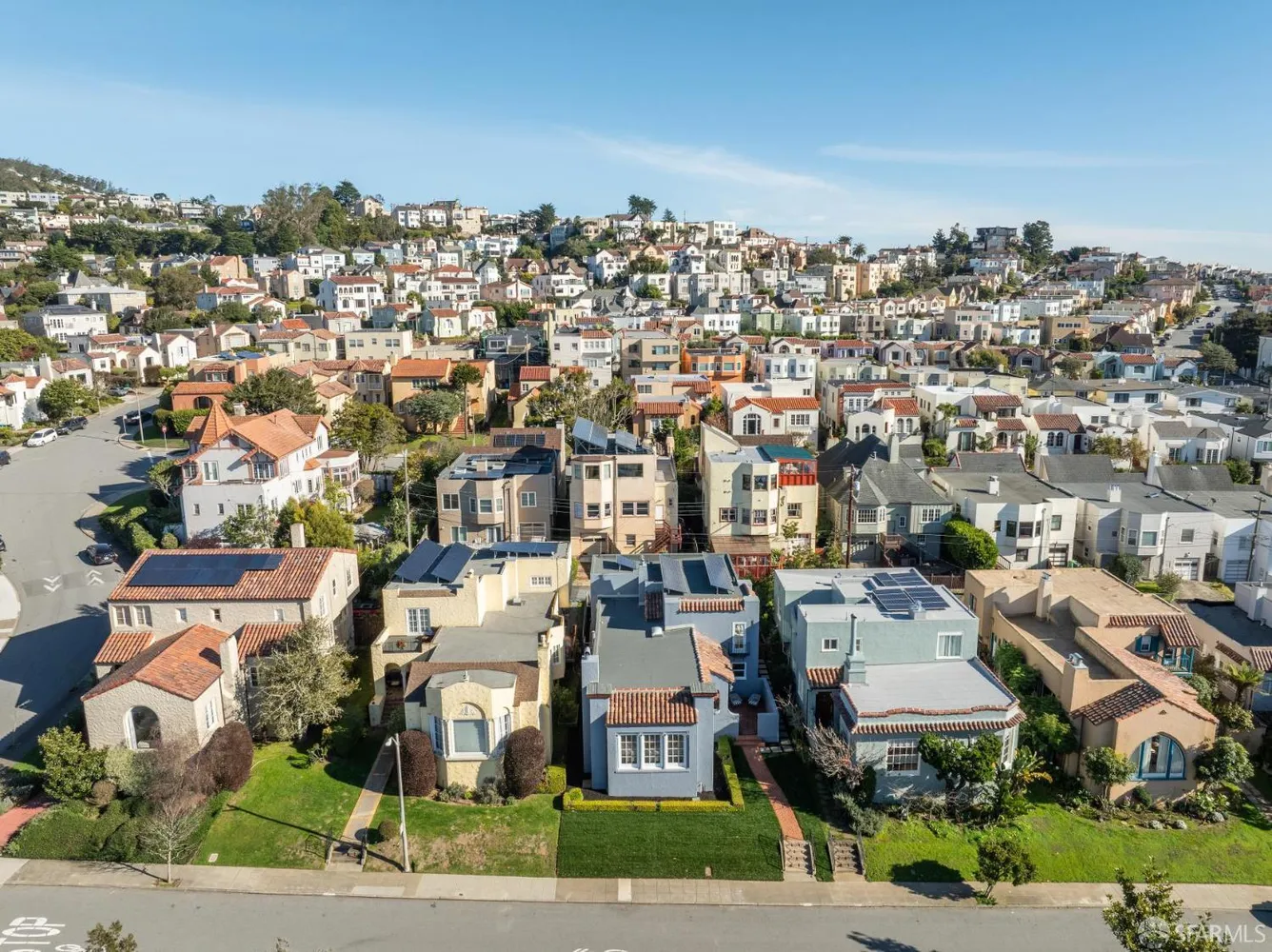
Balboa Terrace is one of San Francisco’s best-kept secrets: a southwest-side neighborhood of detached single-family homes with front lawns, tree-lined pedestrian walkways, and 1920s architecture, priced about 20% below the per-square-foot price of the adjacent St. Francis Wood. Only seven homes sold there in the last year, which means when one comes up, buyers who know the neighborhood win, and everyone else misses it. I’ve been telling buyers about this neighborhood for a reason. If you want the feel of one of San Francisco’s most distinguished neighborhoods without the price tag, Balboa Terrace belongs on your radar right now.
I spend all day helping buyers understand every pocket of San Francisco, including the ones that never come up in the first conversation. Balboa Terrace is exactly that kind of neighborhood, and it’s one I find myself recommending more and more.
It sits on the southwest side of the city, bordered by St. Francis Wood, West Portal, Ingleside Terraces, and — moving further west — Merced Manor and Inner Parkside. On a map, it looks like it’s on the edge of things, but it’s more central than it reads, and the transit access to downtown makes it genuinely practical for most buyers.
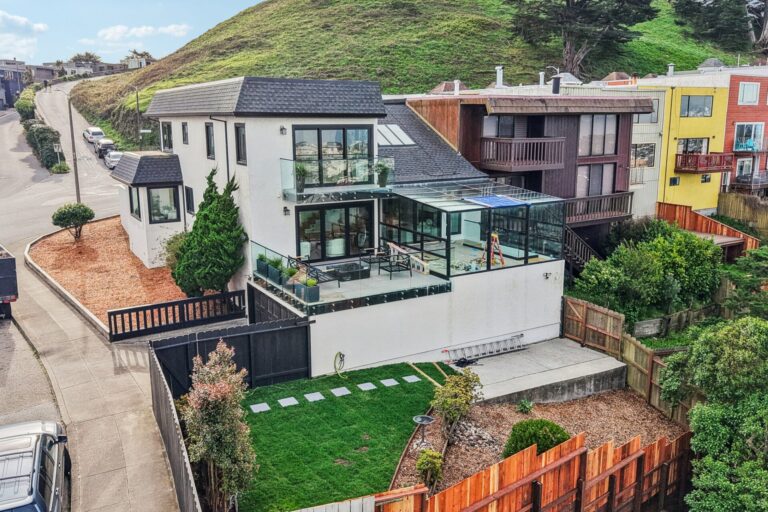
What makes it rare for San Francisco: front lawns, grass, tree-lined streets, and rear alleyways with detached garages. I grew up in the Midwest, where that was just normal: alleyways, detached garages, that kind of layout. We really don’t have that in most of San Francisco. Here you do. The neighborhood was developed with a unified vision from the beginning, and an HOA has maintained that cohesion ever since. You get a consistent streetscape of 1920s architecture with Spanish revival and Mediterranean influences that still reads as classic, beautiful San Francisco, just without the front garage dominating every facade.
One of my buyers just purchased a home here a few weeks ago. From the time we first met to the time they were in contract was one week. That’s how this neighborhood works — when something comes up, you have to be ready.
Balboa Terrace sells at roughly 20% less per square foot than St. Francis Wood, despite sharing the same original developers, the same flat walkable streets, and nearly the same neighborhood character.
Walking from Balboa Terrace into St. Francis Wood, the shift is subtle. The sidewalk changes. You’ll notice the red brick pavers with little diamond inlays that signal you’ve crossed over, almost like a yellow brick road. The homes get a bit larger. The price points get more serious. But the feel, the architecture, the tree-lined streets, and the access to West Portal? Nearly identical.
In the last year, the average sale price in Balboa Terrace was $2.3 million. In St. Francis Wood it was $3.6 million. That’s over a million dollar difference. On a price-per-square-foot basis, St. Francis Wood comes in just under $1,300; Balboa Terrace is just over $1,000. That 20% discount is real and it’s meaningful, especially right now when everyone is looking for ways to find value without sacrificing the lifestyle they want.
The HOA structures are different too. St. Francis Wood’s dues are based on property size and typically run a few thousand dollars a year. In Balboa Terrace, my clients are paying between $700 and $800 a year, though dues did increase 12% last year, in line with landscaping and maintenance costs. Both HOAs are primarily about maintaining cohesion and shared spaces, alleyways, landscaping, common thoroughfares, rather than restricting what you do inside your home. In most ways, you can still build and modify the house you want.

Only seven homes sold in Balboa Terrace in the last year. Roughly one every other month, which means when inventory appears, hesitation is not an option.
San Francisco has roughly 89 subdistricts packed into 7 square miles. A lot of these smaller pockets trade very infrequently, and Balboa Terrace is one of them. For context, St. Francis Wood had 14 sales in the same period, about one a month. Balboa Terrace, every other month, is even thinner.
That low volume cuts both ways. Prices tend to be more stable when transactions are sparse. There’s no flood of comps pulling values around. But it also means buyers who aren’t prepared to move quickly will keep missing their window. My clients who just bought here got it right: they understood the inventory data, saw that homes in this neighborhood don’t sit around, and when the right property came up, they made it theirs. They’re now in a stunning home in a neighborhood most buyers weren’t even thinking about.
If you’re seriously considering Balboa Terrace, the strategy is simple: get educated on the neighborhood now, before a home appears, so that when it does you already know what you’re looking at and what you’re willing to pay.
Balboa Terrace is best suited for buyers who prioritize walkability and neighborhood character over sun, and who can give up a little on location in exchange for a lot on quality of life.
I’ll be upfront: this neighborhood gets fog off the ocean. It’s not the sunniest pocket in the city. If the sun is your non-negotiable, it probably won’t be the top of your list. But I’ve found that buyers who can make that trade-off end up in a much stronger position in this market — because they’re not competing for the same thing as everyone else.
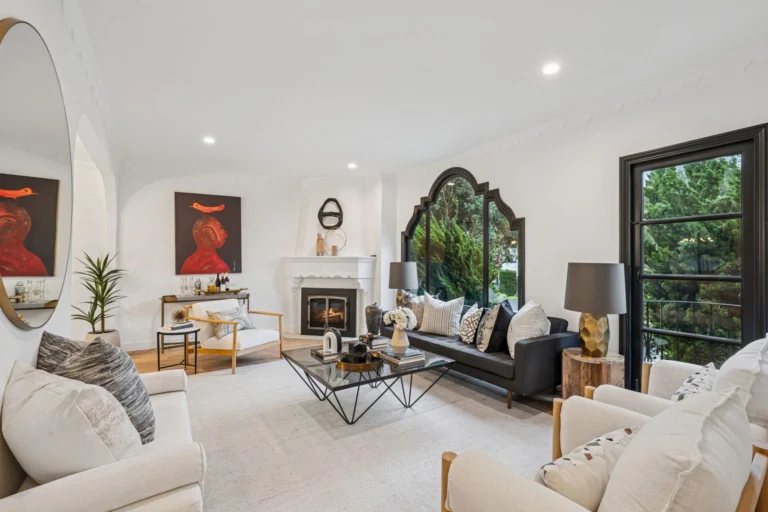
The buyers I worked with here were a great example. The wife didn’t drive much, so high walkability was essential. They didn’t care about the sun. They wanted somewhere to set down roots, a real neighborhood with character, where they could see themselves raising a family for a long time. When they first came to me, they actually thought they wanted a fully developer-renovated home, something turnkey and completely updated. Then they walked into this 1920s house with the period details, the coffered ceilings, the original character in the living and dining rooms, and everything shifted. Suddenly, character mattered very much to them.
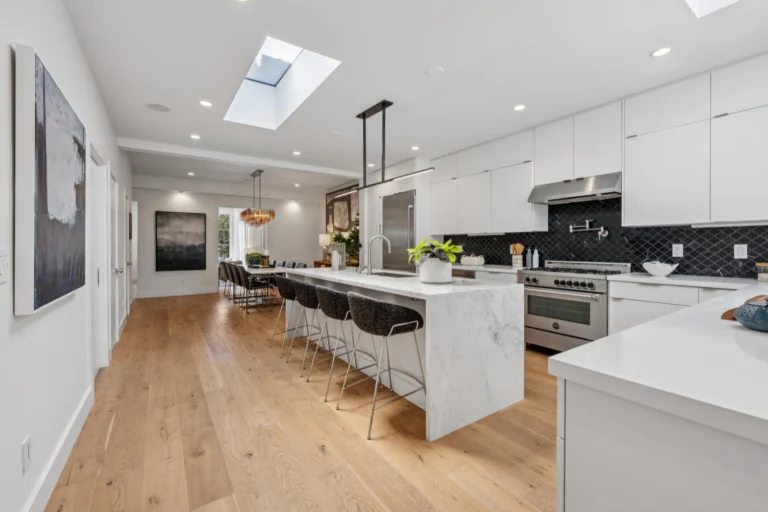
The home had a renovated kitchen, period details throughout the main living spaces, bathrooms that needed love, no primary en suite in the traditional sense, and a small backyard. They made every one of those trade-offs willingly, because the neighborhood, the scale, and the bones of the home were exactly right. That kind of self-awareness, knowing what you actually need versus what sounds good in theory, is honestly what I see separating buyers who win from buyers who keep losing in a market like this one.

From most of Balboa Terrace, West Portal is roughly a five-to-seven block walk, entirely flat, and the route passes through St. Francis Wood.
West Portal is the main commercial corridor for Balboa Terrace residents, and I think the walk there is one of the genuinely underrated pleasures of living in this neighborhood. You’re walking through some of the most beautiful residential streets in San Francisco just to get to your coffee or dinner. That’s not nothing.
West Portal itself has had a lot of investment in recent years. There are legacy businesses that have been there for decades alongside newer spots that have opened up in the last few years, restaurants, shops, and community staples. A lot of the business owners live in the neighborhood, which gives it a real community feel that’s harder to find in busier parts of the city. And for getting downtown, the Muni line picks up right on the street and runs directly in about 12 to 15 minutes. Buyers who initially feel like Balboa Terrace is too far from the action tend to recalibrate quickly once they understand that transit connection.
Most homes in Balboa Terrace were built in the 1920s with Spanish revival and Mediterranean influences, and most of them have held onto their period details, which is increasingly rare and increasingly coveted.
One of the things I love about this neighborhood is that it hasn’t been fully flipped. Most homes haven’t had a gut renovation. They’ve maintained the natural look: original woodwork, classic details, the bones that developers can’t reproduce in a remodel. That’s actually something I hear from a lot of buyers: they say they want something turnkey, but what they really mean is they want to be able to move in and love the place, and then make it their own over time. Maybe a kitchen remodel in year two. Maybe a bathroom in year three. Buyers sometimes think that’s a unique tolerance for a project, but it’s actually one of the most common things I hear. And Balboa Terrace is a neighborhood that accommodates that well.
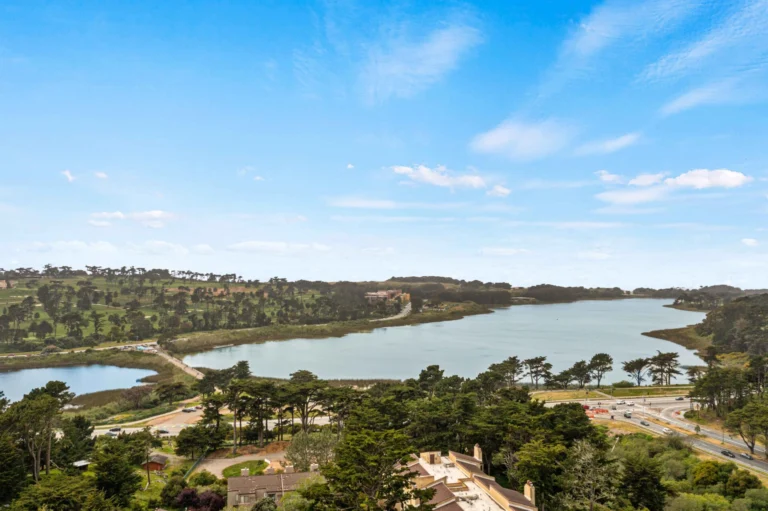
The pedestrian thoroughfares running between the homes, private, landscaped, HOA-maintained, are unlike anything I’ve seen in the rest of the city. Walking through them, you can actually see the Pacific Ocean. The rear alleyways mean the street facades are lawns and landscaping, not garage doors. The whole effect is cohesive and quietly beautiful in a way that surprises people who haven’t been here before.


Yes — and I’d specifically recommend it for buyers who have been losing repeatedly in neighborhoods like Noe Valley, Eureka Valley, or Cole Valley, and who are ready to think differently about where to look.
Most buyers I meet for the first time come in with a list of four or five neighborhoods, the ones everyone talks about, the ones that come up on every “best of SF” roundup. Those neighborhoods are also the most competitive and the most expensive, by definition. Part of my job is making sure buyers don’t miss the pockets that match what they actually need but never appeared on their consideration set.
Balboa Terrace checks things that are genuinely hard to find anywhere else at this price: detached homes, flat walkability, architectural character from an era of construction that can’t be replicated, and a price per square foot 20% below the neighborhood right next door. And walking through it, what strikes me every time is that the feel of St. Francis Wood, that sense of being in something special and distinguished, transfers over pretty seamlessly. The same original developers had a hand in both neighborhoods, and it shows.
In a market this competitive, the buyers who win are the ones who know more neighborhoods than their competition. If what I’ve described here sounds like it could be the right fit, I’d love to talk through it.e can walk you through the inventory reality, what comes up and how often, and how to be positioned to move when it does. Reach out anytime.