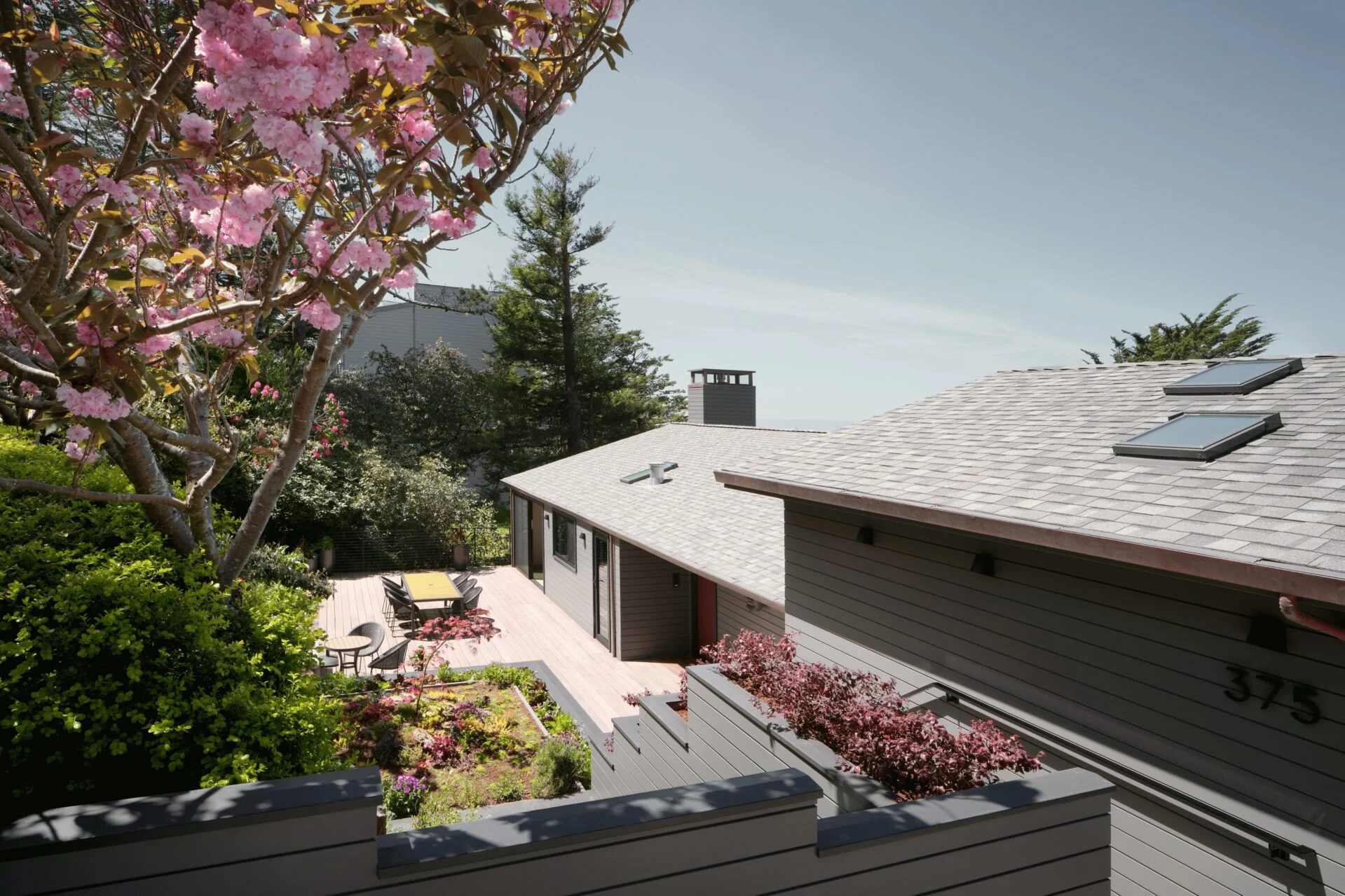
Forest Hill Extension is one of those neighborhoods I keep coming back to when buyers think they’ve exhausted their options on the southwest side of the city. Homes here average $2.1 to $2.2 million, roughly $650,000 less than comparable homes in the neighborhoods most people are targeting, with detached 1930s architecture, flat walkable streets, and direct access to the West Portal commercial strip. Only 15 homes sold here last year, so when one comes up, buyers who know the neighborhood are the ones who win.
Forest Hill Extension sits on the southwest side of San Francisco, adjacent to West Portal, Forest Hill proper, St. Francis Wood, and Pine Lake. It’s one of those neighborhoods that most people have never visited, and honestly, most people have never even heard of it. But that’s exactly what makes it interesting for buyers who are willing to look a little outside the well-worn search areas.
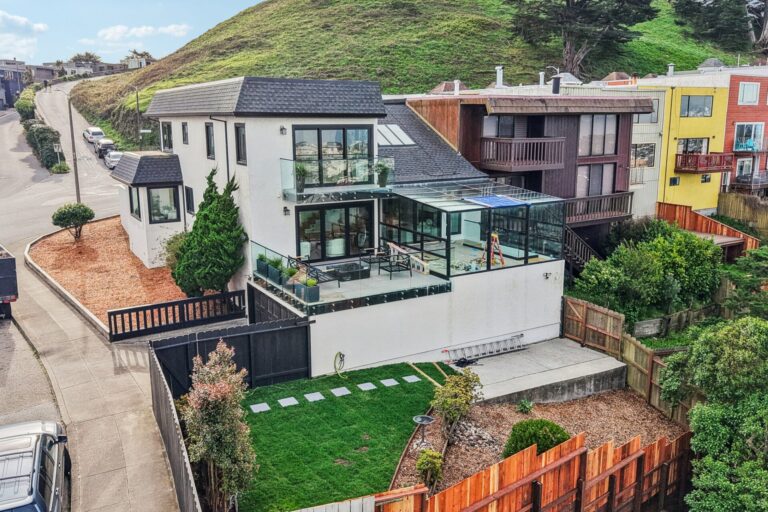
The neighborhood has two distinct zones worth understanding. Up on Edge Hill, the elevated section that feels, genuinely, like you’ve left the city and landed somewhere in Marin, you have a quiet, remote stretch of homes with dramatic views, one-way streets, and almost no through traffic. It is not walkable in the traditional sense; getting down to the commercial strip involves a significant hill. But the people who live up there are generally not trying to walk to coffee. They’re there for the solitude, the views, and a private setting that doesn’t exist anywhere else at this price point in San Francisco.
Down in the flats, it’s a different story entirely. The streets are very flat, the architecture is predominantly 1930s-era detached homes, and West Portal is right there. That combination, detached homes, flat streets, West Portal access is genuinely hard to find at this price.
The average home price in Forest Hill Extension over the last year was $2.1 to $2.2 million, at just under $1,000 per square foot, roughly $650,000 less than comparable homes in West Portal.
That’s a meaningful gap. West Portal homes are selling 12 to 15% higher than Forest Hill Extension on a price basis, and they move about three times faster, 12 days on market in West Portal versus 34 days in Forest Hill Extension. So you’re getting more time to make a decision and a lower entry price, while still having access to the same commercial strip.
Only 15 homes sold in Forest Hill Extension last year. That’s a thin market, which means when something comes up it tends to draw real competition. Lauren, on my team, wrote an offer on a home on Idora recently and there were 10 offers on it. Low inventory doesn’t mean low demand. It means you have to be ready.
The average home size in the flats runs about 2,100 to 2,200 square feet. If you want something larger, Forest Hill proper, directly adjacent, has bigger homes, though it’s considered less walkable and skews more toward evening strolls than daily errands on foot.
Most homes in Forest Hill Extension date to the 1930s and are notably detached, which is genuinely hard to find in San Francisco, especially at this price point.
Walking the streets down in the flats, the neighborhood has a consistent, quiet character. The architecture reads as solidly built 1930s stock, not flashy, but well-proportioned, with the kind of bones that renovation-minded buyers look for. Because the homes are detached, you get light on all sides of the house, which is something you simply can’t get in most of San Francisco’s more densely built neighborhoods.
The streetscape is almost uniformly flat down here, which adds to the livability. You can walk the neighborhood easily without encountering the hills that dominate much of the rest of the southwest side.
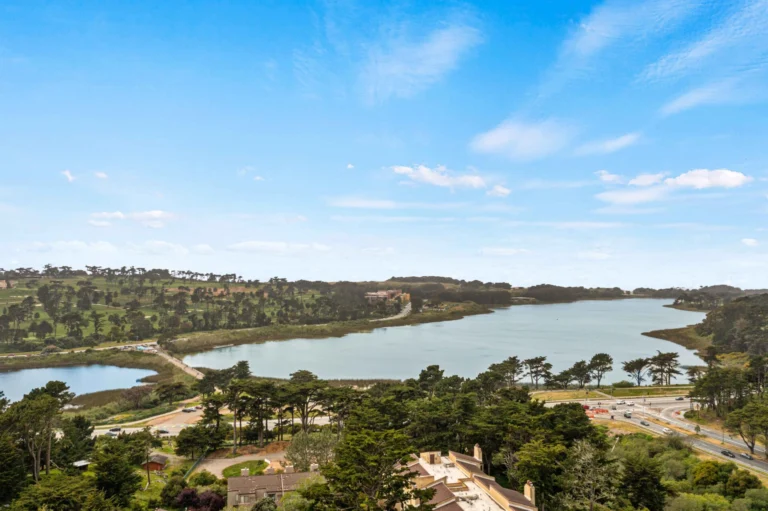
The elevated section of Forest Hill Extension, Edge Hill, offers views of the Golden Gate Bridge, the Farallon Islands on clear days, and a level of quiet that feels more like Marin than San Francisco, at the cost of walkability.
I walked up Edge Hill recently to tour one of the most remarkable homes I’ve seen in San Francisco in a long time. It was built by contractor Aaron Gordon for his mother, originally his grandfather’s house from the 1950s that was gutted and rebuilt as a fully custom aging-in-place residence. The views from up there, Golden Gate Bridge, with the Farallon Islands visible on most days, and the Pacific Ocean in the background, are genuinely spectacular. Aaron told me the sunsets are something else entirely.
One of the most interesting things I learned on that tour is that the Sangiacomo family, one of the most prolific builders and real estate figures in San Francisco’s history, chose to build his own home right here on Edge Hill. Not only that, he built nine additional homes for his children and family members on the same stretch. When someone who could build anywhere in the city chooses Edge Hill, that tells you something.
The tradeoff is clear: it is a steep walk down to the commercial strip, and a steep walk back up. Most people who live up there make peace with that and appreciate the quiet solitude. For buyers who prioritize walkability, the flats are the better fit.
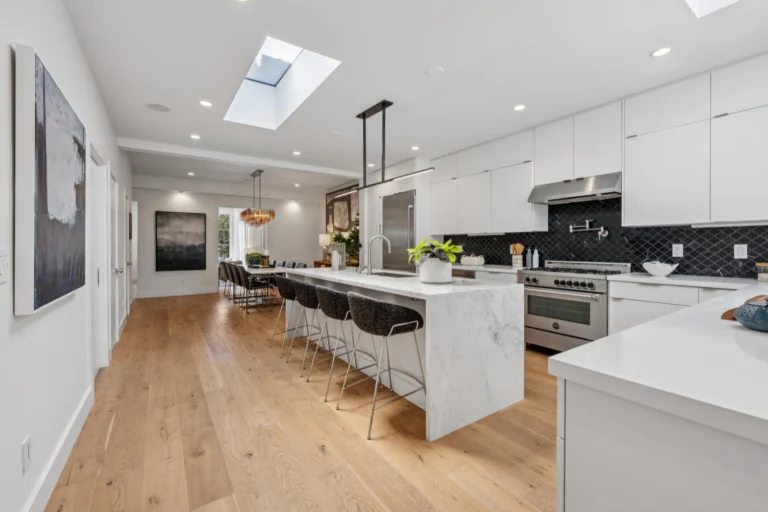
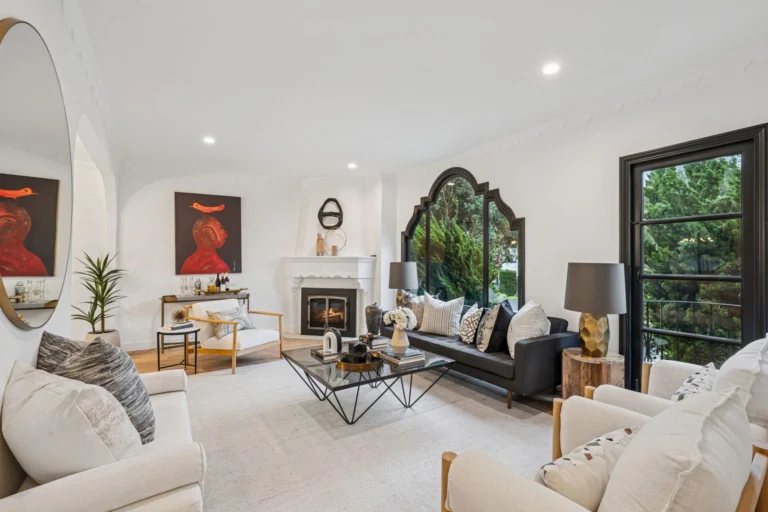
The home Aaron Gordon built for his mother on Edge Hill is one of the most thoughtfully designed aging-in-place residences I’ve seen, with an elevator, a deck lift, zero-threshold entry throughout, wheelchair-accessible spaces, and high-end finishes that don’t telegraph “accessibility” at all.
I want to spend some time on this because aging in place is something a lot of buyers think about and very few homes are actually built for. Aaron’s approach here was to integrate every practical feature into a design that is genuinely beautiful, so nothing reads as a medical accommodation.
The entry is zero-threshold. All doors are wide and trimless. The elevator connects the floors. Where the elevator couldn’t reach the garage due to the design of the primary bedroom, Aaron built a deck lift cleaner and far less expensive than an elevator extension, at $15,000 to $20,000 versus $100,000 or more for a full elevator installation. The garbage enclosure was designed so Aaron’s mother never has to move her car to get cans to the street. The kitchen cabinets that were too high were made motorized. The sink has a raised insert so dishes can be washed without bending over. The shower is fully wheelchair-accessible with waterproofed flooring throughout the bathroom.
And then it finishes. Book-matched oak paneling on walls and ceilings. A lava stone liquor cabinet, lava stone is a newer product where the volcanic material acts as a substrate for a porcelain finish, available in any color, and favored by designers for the exact color control it allows. Motorized shades in pockets that disappear completely. Trimless doors with Texas hinges. A pivot door to the primary suite with magnets built into the jamb so it closes cleanly with nothing to latch against. Linked closet doors on a pulley system, pull one, and the other closes. A Murphy bed system with integrated power, reading lights, and shelving from Resource Furniture, the couch folds up with the bed, so you don’t have to move anything around to convert the room.

The architects were David Gast Architects, with David Bjornard handling finishes, colors, and lighting. The tolerance on a build like this is extremely tight, as Aaron explained, a 1/16-inch difference in a reveal will catch your eye immediately. Simple-looking modern design is actually the hardest to execute well.
Aaron’s mother did live in the house during the renovation, which added six to eight months to the schedule and ended up costing more than simply renting elsewhere would have. Lesson learned: don’t live in your house during a major remodel.


West Portal, the main commercial corridor accessible from Forest Hill Extension, has evolved significantly in recent years, with new restaurants and shops alongside legacy businesses that have anchored the neighborhood for decades.
From the flat section of Forest Hill Extension, West Portal is an easy walk. The strip has been coming back in a real way. There’s a wine shop (Unwined) that’s a great stop after work, a long-running Italian spot, a high-end pastry and donut shop from a serious pastry chef, several pizza places, including one that’s been open 30 years and still does pizza by the slice, a vegetarian sushi restaurant, and a hardware store. Something new is reportedly coming into the Lemonade space, though I didn’t have confirmed details on that at the time of filming.
For groceries, there’s no full-size supermarket directly on the strip, but you’re close to several options: Molly Stone’s on Portola, Trader Joe’s and Whole Foods at the nearby mall, and a Safeway on Taraval. Stonestown Mall is also close for broader shopping needs.
The Muni station at West Portal is underground and gets you downtown in approximately 12 minutes. For drivers, the main drag feeds directly onto Market Street toward downtown, or in the other direction to the 280 freeway, which is the route for anyone commuting to the peninsula for tech or biotech work.
Forest Hill Extension sits close to Stern Grove, Mount Davidson Park, Glen Park Canyon, and the Edge Hill trail system. There’s a lot of green space access for a neighborhood that most people haven’t even heard of.
Stern Grove is just behind the neighborhood and hosts free outdoor concerts in the summer. I’d call it one of the better community traditions in the city. You can bring a picnic, bring kids, and hear genuinely good artists in an outdoor setting. Trails from Stern Grove connect down to Pine Lake, which is a nice way to spend a morning.
Mount Davidson Park is right nearby as well, with a full trail network. From Edge Hill specifically, you can actually cross over directly onto the Mount Davidson trails, so the elevated section of the neighborhood has immediate trail access without getting in a car.
Glen Park Canyon is also not far. For a neighborhood at this price point, the outdoor access here is genuinely a nice bonus.
Forest Hill Extension is the most affordable entry point into the West Portal area, priced 12 to 15% below West Portal proper and about $650,000 less on average, while sharing access to the same commercial strip, transit, and parks.
I think of Forest Hill Extension as the value play for buyers who want everything West Portal offers but can’t quite stretch to West Portal prices. The main differences are: homes sell more slowly here (34 days on market vs. 12 in West Portal), the inventory is very thin (15 sales last year vs. more frequent turnover in West Portal), and the price per square foot stays just under $1,000 vs. higher in West Portal.
Adjacent neighborhoods worth considering in the same area: St. Francis Wood (directly across the street, more money, more prestige, an HOA, larger homes), Pine Lake (more affordable, quieter, a bit further from the strip), and Balboa Terrace (detached homes with front lawns, HOA-maintained, also near West Portal, also a value relative to St. Francis Wood). I’ve done full neighborhood videos on all of these, and if you’re searching this side of the city, walking more than one of them before deciding is worth the time.
If Forest Hill Extension sounds like it could be the right fit, or if you want help thinking through how it stacks up against other neighborhoods for your specific priorities, reach out to us.