Our clients lost their first offer early this year, then came back the same evening to pursue a home in Pine Lake Park, a small, largely unknown neighborhood on the west side of San Francisco. With offers due at 10 AM the next morning and a list price of $1,295,000 that masked a true market value well above $1,950,000, we had 12 hours to review disclosures, run comps, and build a complete offer package. The home received 19 offers. Through real-time market knowledge, a strong offer strategy, and a negotiation that secured our clients the only single counter out of 19 offers, they won the home at $2,050,000, without going through another round of competing counters that could have pushed the price even higher.
Earlier this year, our clients came to us looking on the west side of San Francisco. They were open to Parkside. Open to the Sunset. The usual starting points for buyers in that part of the city.
And then a house came on the market in Pine Lake Park.
You’ve probably never heard of it. Most buyers haven’t. It’s small, tucked away, and easy to overlook in a city with 89 neighborhoods. But our clients were drawn in: the curving streets, the mix of Tudor Revival and Mediterranean architecture, the fact that there’s an actual natural lake right in the middle of it.
The home received 19 offers. They won.
But the part that makes this story worth telling isn’t just the outcome. It’s how it happened and what it reveals about how to compete successfully in San Francisco’s most challenging market conditions.

Pine Lake Park sits in the southwest corner of San Francisco, bordered by Parkside to the north, Outer Parkside to the west, Lakeshore to the south, and West Portal to the east. It’s one of the smallest neighborhoods in the city, fewer than 275 homes, which means inventory is limited and turnover is low.
When something comes on the market here, buyers notice.
What draws them in is a combination of things you don’t find everywhere on the west side: streets that curve instead of following the strict grid, a genuine architectural mix of Tudor Revival and Mediterranean homes, and the park itself, one of the few natural lakes in San Francisco, with walking trails, a dog park, tennis courts, and an athletic field.
Stern Grove is right next door. The SF Zoo is a five-minute drive. Ocean Beach is minutes beyond that.
For buyers who’ve been priced out of neighborhoods like Noe Valley, where single-family homes now routinely trade above $3 million, the west side has become increasingly attractive. And within the west side, Pine Lake Park checks most of the same boxes as Parkside and the Sunset, often at a premium that reflects its scarcity and charm.
Average sale price for a three-bedroom home here: approximately $2 million. Parkside, by comparison, saw 58 sales in the same six-month window at an average of around $1.6 million. Less inventory and more demand adds up.
A few factors converged at once.
This was one of the first waves of sales at the beginning of the year, and buyer demand had been building since before the holidays. Inventory across San Francisco was — and remains — historically tight. And Pine Lake Park, with fewer than 275 homes and low turnover, amplifies that dynamic even further.
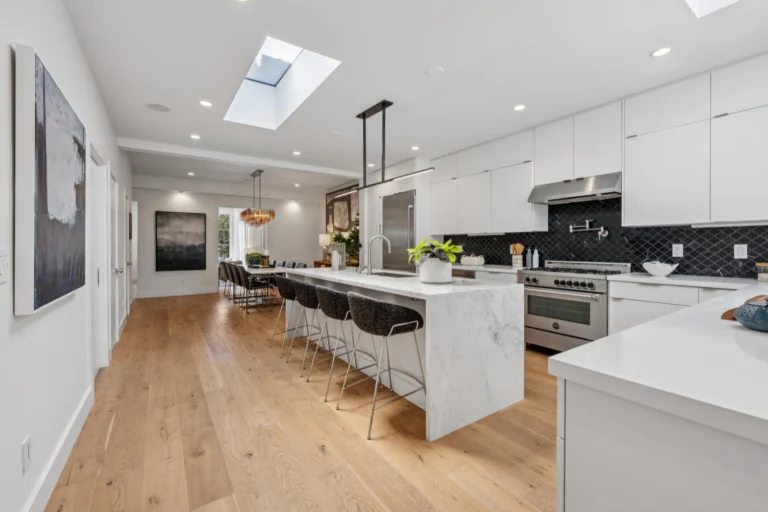
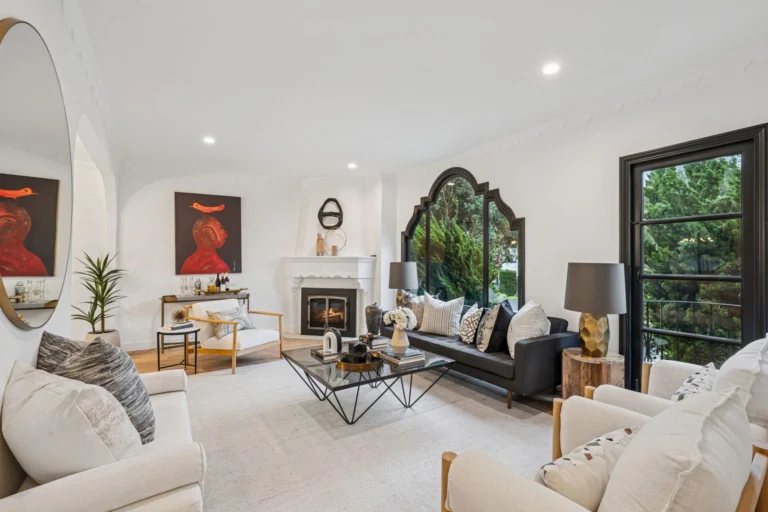
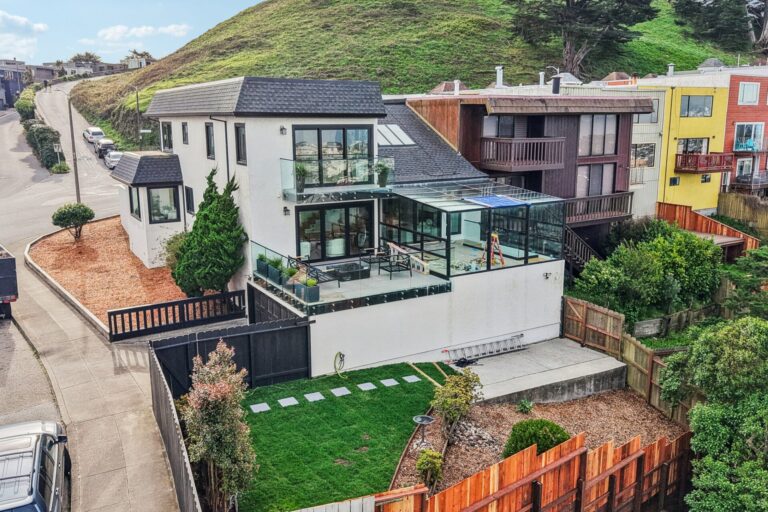
The home itself was fully updated, kitchen, bathrooms, great yard, strong character throughout, and it was listed at $1,295,000, a price point that cast a wide net and brought in buyers from across the west side. Many of those buyers had been looking in the Sunset and Parkside and hadn’t even considered Pine Lake Park before. This listing put it on their radar for the first time.
When a well-presented home in a supply-constrained neighborhood hits the market at an accessible entry price, competition follows. Nineteen offers was the result.

Our clients had written their first offer with us just a few days earlier on a different property. That offer reflected the uncertainty of that moment. We were already seeing signs that the market had moved roughly 20% compared to last year’s comps, but it was early enough that we weren’t fully certain yet.
They lost it.
That same evening, they came back to us about the Pine Lake Park home. They wanted to move forward. Offers were due the next morning at 10 AM. They told us at 8 PM.
The house was listed at $1,295,000. In San Francisco, low list pricing is one of the most common strategies sellers use, and it works. It casts a wide net, generates more showings, and creates competitive energy that drives offers well above asking. For buyers, it means the list price is almost meaningless as a signal of value. If you don’t understand what a home is actually worth, you’re either going to overpay chasing it or underpay and lose it entirely.
As a team, we write approximately five offers per week across San Francisco. We don’t wait for sales to officially close before using them as comps, we track what’s happening in real time.
At the point this home came on the market, several comparable properties in the area were pending but not yet closed. Most buyers’ agents were waiting for those sales to hit the public record. By then, this home would have been long gone. Because we had been tracking those sales as they happened, we already knew what those homes were trading for. We had more data going into offer day than most of the other 18 buyers in the room.
What that data told us — combined with what we learned from the first lost offer — was that this market had genuinely moved. Even though the jump from $1,295,000 to well above $1,950,000 looks dramatic on paper, we were confident that’s where this home was going to trade.
We reviewed disclosures that night. We built out the full comp analysis. We put together a complete, clean offer package all before the 10 AM deadline.
That kind of turnaround is only possible because of the team behind the scenes. With a 15-person operation, we’re not a one-agent show scrambling to keep up. We have the depth to move fast when timing demands it, without cutting corners on the work that actually wins offers.

Before submitting, we called the listing agent. This is a standard part of our offer-day process, and it consistently gives us information that changes how we position our clients.
What we learned: there were going to be 19 offers on this property. The competition was going to be intense. To have a real shot, our clients needed to land in the top three.
We wrote the offer at $1,953,000.
When offers were reviewed, there was already an offer above ours at $2,000,000, and the sellers were satisfied with that number. The standard next move in that situation would have been a multiple counter: issue counters to several top buyers, reset the timeline, and run another round. That process can push prices even higher and adds time and uncertainty for everyone involved.
We negotiated something different.
Out of 19 offers, our clients received the only single counter at $2,050,000. They were the only buyers given that opportunity. They accepted. The deal was done, without another round of counters that could have cost them significantly more.
A few things this story illustrates about the current San Francisco market:
Inventory is the defining issue. When a neighborhood has fewer than 275 homes and low turnover, a single listing can draw outsized interest. This isn’t unique to Pine Lake Park, it’s playing out across the west side and beyond.
The list price is not the price. Low list pricing is a feature of this market, not a bug. Buyers who write offers anchored to the list price are consistently losing. Knowing what a home will actually trade for requires real-time market knowledge, not closed sales from 60 days ago.
Speed requires a team. A 12-hour turnaround on a competitive offer, with full disclosure review, comp analysis, and a clean offer package, isn’t something one person can pull off alone. It requires infrastructure.
Negotiation happens after the offer. Getting into the top three is the entry point. What happens in the negotiation after offers are reviewed is where buyers can either protect themselves or leave money on the table. In this case, the single counter saved our clients from potentially going through another round of competing offers at a higher price.
If you’ve been losing offers, or if you’re trying to understand how to approach this market, we’d love to talk. We work with buyers across San Francisco neighborhoods every week, and we’ve seen what separates the offers that win from the ones that don’t.
Reach out to us we’d love to help you.
“Ruth Krishnan and her team are the best! We worked with Valerie for our first home
purchase in San Francisco. Valerie was extremely patient, listened to our needs, and thoroughly educated us about the home buying process. We were able to win on just our second offer!
Valerie and Ruth’s whole team are extremely connected in San Francisco in the real-estate community which was very beneficial during this hard market and as first-time buyers. We felt like we had a leg up with Valeria and trusted her throughout the whole process. She paid extensive attention to detail and took the time to sit down and walk us through every detail throughout the process.
We would highly recommend Valerie and anyone from Ruth’s team and hope to work with them again in the future! Thank you Valerie!!”
– J. and J., Buyers