As a San Francisco native who has lived here for 38 years, grown up in Bernal Heights, sold lots of real estate, and worked in nearly every neighborhood in the city. I have also traveled extensively and experienced living and visiting elsewhere, so I have real context for what makes this city different. This is my honest take on why people fall in love with San Francisco and why some eventually leave.
San Francisco has a neutral climate of around 60 degrees year-round, which makes outdoor activity possible every single day, even if it is not always warm and sunny.
People joke about San Francisco being foggy, and the fog even has a name here: Karl the Fog, who visits regularly. The coldest winter I can remember was a Thanksgiving week where temperatures dipped into the 30s. But most of the time, you are looking at 60 degrees, which means you can get outside for a walk or a bike ride every single day of the year. That matters more than people realize until they have lived somewhere like New York or Chicago, where for several months, you genuinely do not want to leave the building.
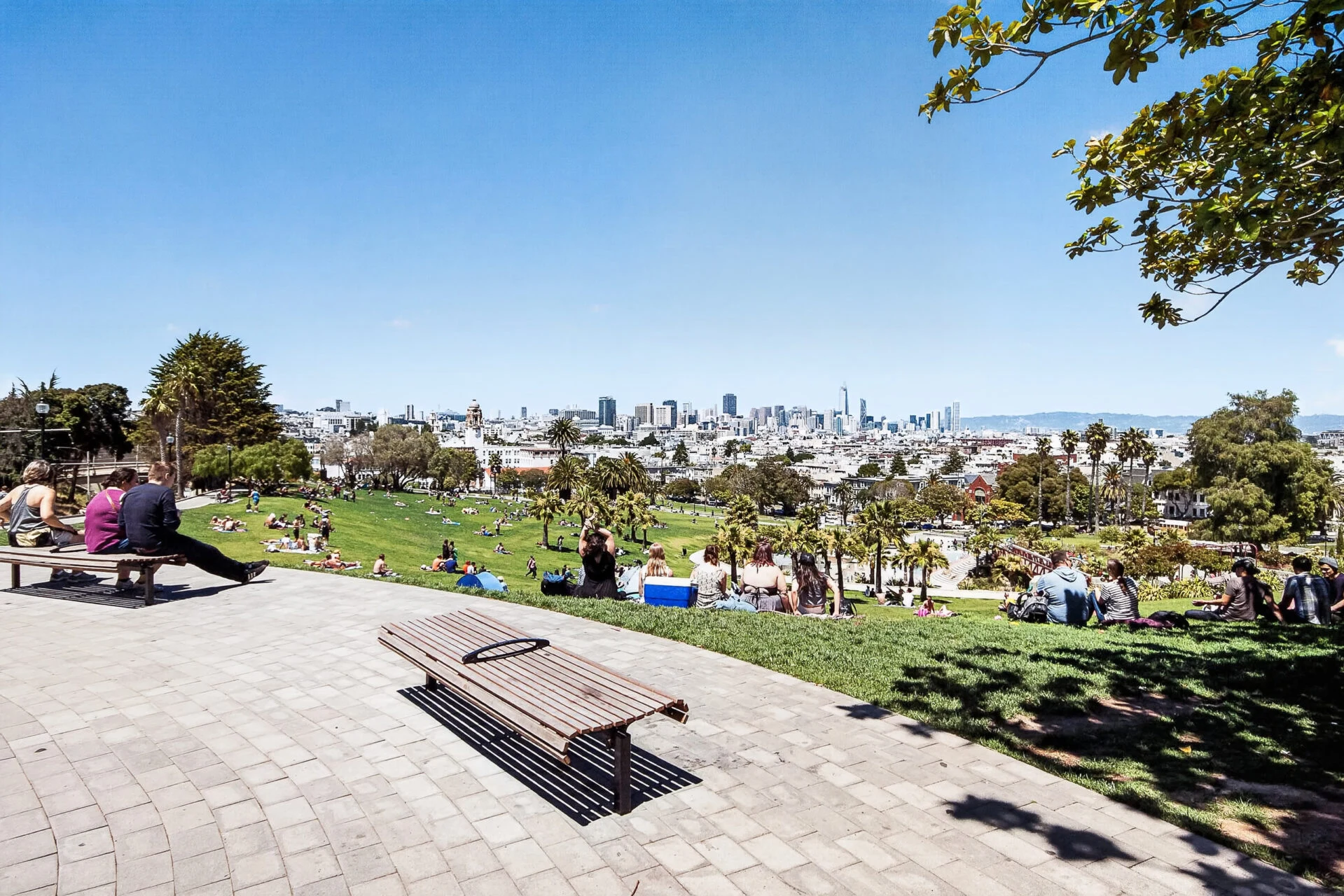
The day I filmed this, it was 55 degrees, sunny, and beautiful at Dolores Park. I had a light suede jacket on. That is winter in San Francisco. I got up that morning and did an hour-long walk. That is the quality of life I am talking about.
What is true is that San Francisco has microclimates, and where you live in the city does affect how much sun you get. Some neighborhoods are significantly sunnier and warmer than others. If you are someone who absolutely needs sun, that should factor into where in the city you choose to live. But in terms of being able to get outside and stay active year round, San Francisco is genuinely hard to beat.
Within one to four hours of San Francisco, you have Marin hiking trails, Napa wine country, Lake Tahoe, Big Sur, and Southern California, making it one of the best-positioned cities in the country for weekend escapes.
Within the city itself, you have world-class parks. Dolores Park, where I am right now, is massive, hilly, and has stunning views. You can do bike rides across the Golden Gate Bridge. Golden Gate Park runs all the way to Ocean Beach. There is no shortage of outdoor space inside the city limits.

Golden Gate Bridge

Dolores Park
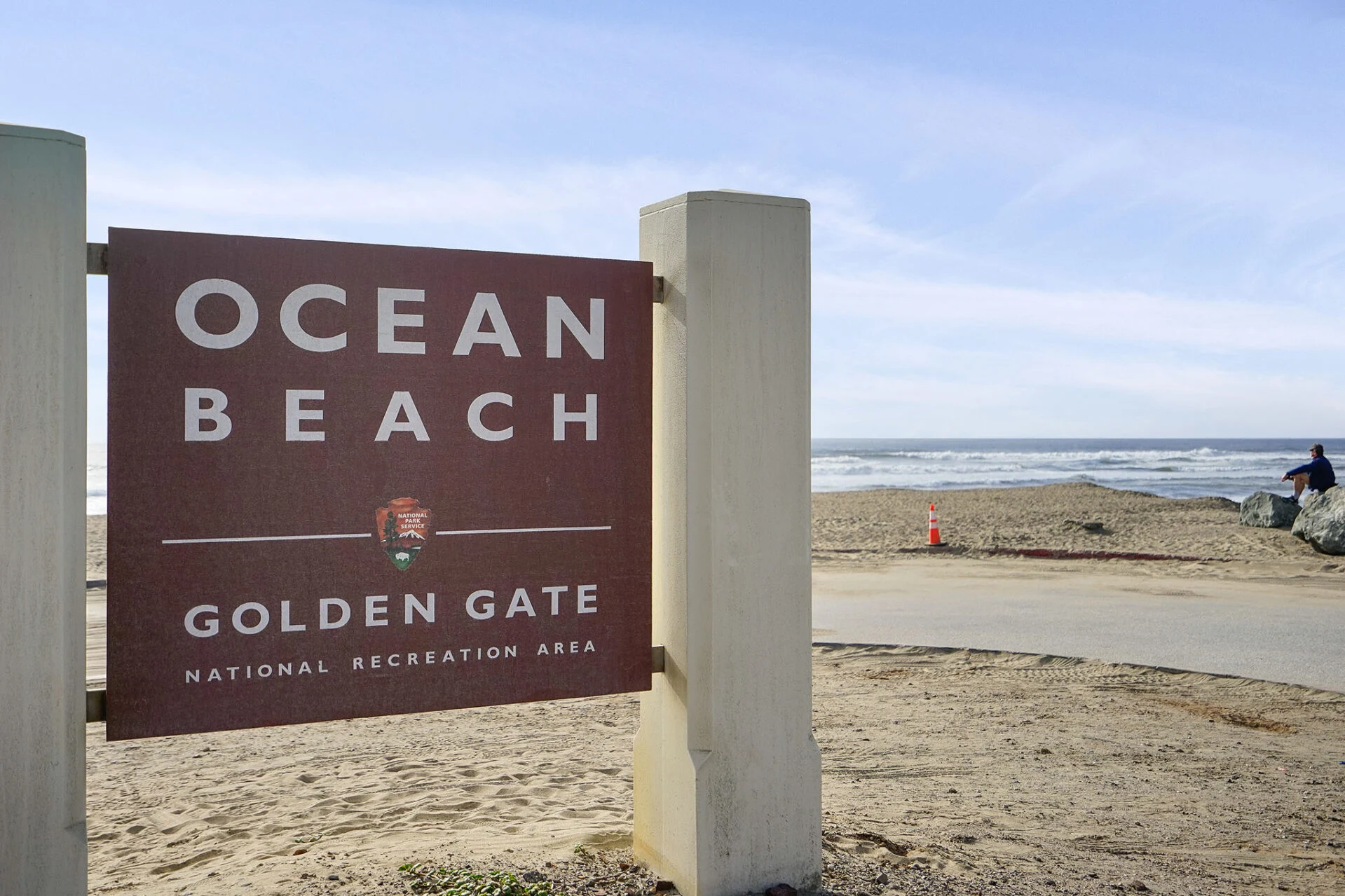

But the proximity to everything outside is what I think is truly special. Marin is right across the bridge, with serious hiking and bike trails in the Marin Headlands. I just hiked to Alamere Falls in Marin a couple of weekends ago, a 45-minute drive, and it was spectacular. From there we drove to Napa for wine tasting and a long lunch, had dinner, and were home by 10 PM having left at 7 AM. I do not know many places where you can do that in a single day.
Napa and Sonoma are 45 to 50 minutes away in most cases. Tahoe for skiing and snowboarding is about three and a half hours, and in summer the water is so blue you can spend the whole day on the lake. Big Sur is a few hours south. Southern California is a five-hour drive. If you love to travel and explore, living here means your weekends have a lot of options.
The median household income in San Francisco is approximately $145,000, compared to around $80,000 in Texas, and the concentration of AI, tech, biotech, and other high-growth industries creates real earning potential across many fields.
The innovation culture here is not just something you read about. It attracts people from all over the world and that energy translates into every industry. Yes, AI and tech bring enormous wealth into the city right now, but the arts, biotech, real estate, healthcare, and even administrative roles pay significantly better here than in most other cities. I have a friend group in San Francisco that spans completely different industries and backgrounds, and that mix of perspectives is something I genuinely value about living here.
The honest caveat is that this is also one of the most expensive cities in the country, and higher income does not always mean a better financial position than you would have somewhere else. You can absolutely make more money here, but that alone does not make the finances easy. I will get to that in the next section.
To live comfortably in San Francisco as a couple, you realistically need a combined income of at least $300,000, and to comfortably buy a home with a 20% down payment, you are probably looking at $450,000 or more in annual household income.

The cost of living here is genuinely intense. It is not just housing. Parking meters in front of my office cost $20 for four hours, and the parking ticket when you go over is $110. Groceries are expensive. Dinner out is expensive. An Uber across the city is expensive. I got a coffee recently that was $11. Avocado toast for $20 is not a meme here, it is just Tuesday.
The median home price in San Francisco is currently $1.8 million, and $1.2 million for a condo. There are neighborhoods where you can buy below those averages, but that is the real citywide number. Average rent for a one-bedroom apartment is around $3,200 a month, and if that does not include parking, add another $300 to $500. You are looking at $4,000 a month just to rent a one-bedroom with a parking spot.

This feeds into what I think is one of the harder psychological realities of living here, which is the hustle culture. In a city that costs this much, you do feel pressure to earn more, work more, and optimize constantly. I am guilty of it too. In real estate, especially there is no ceiling on what you can make, which means there is always a reason to keep pushing. I have been reflecting on that a lot. A good quality of life to me means a balanced one, and San Francisco can make that harder to achieve than it should be.
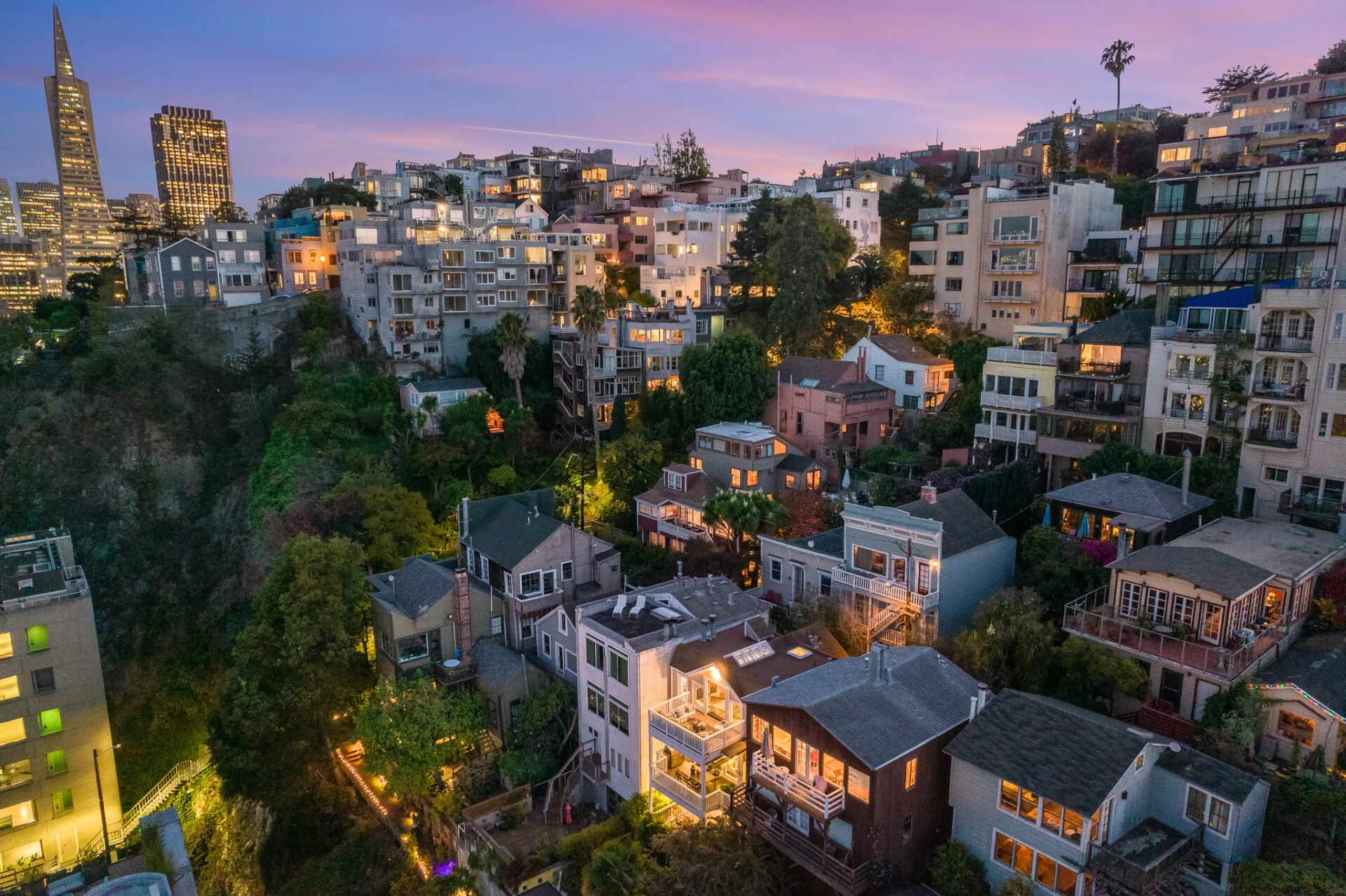
Homes in San Francisco sell on average about 16% over asking price, and it is not unusual to see a home sell a million dollars or more over asking, which has nothing to do with overpaying and everything to do with how listing agents price strategically.
The real estate market here moves fast and can feel deeply uncomfortable, even for people who can afford it. Things are typically selling within 14 days of coming on market. It is not unusual for a preemptive offer to come in the day after a home lists, or even the same day. If you are not ready to move quickly, you can miss a property entirely.
The listing price is a marketing tool here, not an estimate of value. Agents, including us, use a deliberately low price to generate multiple offers and create a competitive environment that pushes the final sale price above the most recent comparable sales. That is an effective strategy for sellers. For buyers, it means you cannot use the list price to calibrate your budget. A home priced at $2 million may have a real market value of $2.4 or $2.6 million.
This is also why working with someone who actually knows the market is so important. I have inherited buyers after they spent over a year with a previous agent writing five to ten offers on properties that were never realistically in their price range. That whole time, the market was moving away from them. Year-over-year prices are up 9% in San Francisco, and just comparing last November to the November before it, prices were up 15%. A year of searching in the wrong direction can be genuinely costly.
Homelessness and crime exist in San Francisco, but are heavily concentrated in specific neighborhoods. In areas like Noe Valley, Pacific Heights, Presidio Heights, Bernal Heights, and most residential neighborhoods, the experience is very different from what you read online.
I travel a lot, and I cannot tell you how many times people who have never visited San Francisco have told me what a terrible place it is to live. It is one of the things I find most frustrating about the city’s reputation. Yes, homelessness is a real issue. Yes, there are parts of the city, particularly the Tenderloin and parts of downtown, where it is more visible. But that is true of every major city in the country. Every city has concentrated areas with higher crime and more visible poverty.
Come to Dolores Park on a sunny afternoon. Walk around Noe Valley or Pacific Heights. The experience is genuinely not what the internet would have you believe. Crime has actually been decreasing year over year in San Francisco, including car break-ins. There is new city leadership and real momentum on public safety and cleanliness. It is not perfect, and it has not been, but it is not the dystopia that people who have never been here describe.
My honest advice: come visit. Walk in different neighborhoods. Form your own opinion based on what you actually see.
California’s state sales tax is about 7.25%, but San Francisco’s effective rate is 8.6%. State income tax is high, reaching 40% or more at upper income brackets, but California’s Prop 13 caps property tax increases at 2% annually and keeps the base rate just over 1%.
A lot of people left San Francisco for Texas or Florida specifically because of income taxes, and I understand that calculation. Those states have no income tax. But what often gets left out of that conversation is property taxes. In Texas, property taxes can run up to 3% of assessed value annually and can increase by up to 10% per year. In San Francisco, Prop 13 limits property tax increases to 2% annually and the base rate is around 1.25%. For homeowners, that protection is significant. You are paying high income taxes, but your property tax is stable and predictable in a way it simply is not in many of the states people are fleeing to.
San Francisco has excellent restaurants and a strong food culture, but the city closes early and does not have a particularly vibrant late-night going-out scene compared to cities like New York, Miami, or major European cities.
I will be honest about this because I think it matters to certain people. Most restaurants close by 9 PM. If you are coming from a culture where dinner starts at 8 or 9 PM, that adjustment is real. The nightclub and late-night bar scene is limited. If going out, dancing, and staying up late is a core part of your social life, San Francisco is probably going to feel quiet.
What the city does have is an exceptional food scene. Every cuisine, every price point. The taco truck on 14th and Harrison in front of Best Buy is genuinely the best street tacos in the city. Kakari is a Mediterranean spot that has been a consistent favorite for a long time because the food is reliable and the wine list is excellent. If you want a high-end experience with views, Angler on the Embarcadero delivers. The food culture here is something even people from cities like New York will acknowledge as exceptional.
The bigger social picture is that San Francisco has a big-city infrastructure with a small-town feel. You can have a full, rich life here. It is just not centered around going out late. And personally, at this stage of my life, that suits me fine.
San Francisco is not for everyone, but for people who value outdoor access, career opportunities, food, proximity to nature, and a major city that does not feel overwhelming, it is genuinely hard to match.
I have lived here for 38 years. I have experienced other cities and other countries extensively. And I keep coming back. What I keep coming back to is this: San Francisco is a major city that does not feel like you have to be on all the time. You get the scale and the opportunity of a big city with something closer to a neighborhood, small-town feel. And with 89 neighborhoods, you can find the version of San Francisco that fits how you want to live, whether that is urban and active or quiet and residential.
The people who do not thrive here are usually those who underestimated the cost, or who were not prepared for the pace of the real estate market, or who needed a more active nightlife and social scene. Those are real limitations and I would rather tell you honestly than have you move here and feel blindsided.
If you are curious about whether San Francisco could work for you, or which neighborhood might fit your life, reach out. My team and I have sold over a billion dollars of real estate here and we are very used to helping people think through exactly this question.