Lofts have been coming up constantly in our buyer conversations lately. We just sold a three-bedroom loft on Harrison Street in two days, sold another client a one-bedroom loft on the same street, and have a buyer who found us on YouTube who just narrowed his entire search to Inner Mission lofts only. There are only about three neighborhoods in San Francisco where loft product exists in any real way. Inner Mission is one of them, and right now it is priced about 30% below Noe Valley, right next door. If you want character and space without the price tag of the most talked-about neighborhoods, I think you need to take a serious look here.
Lofts with genuine high ceilings, industrial character, and open floor plans exist in only about three San Francisco neighborhoods in any meaningful way, and Inner Mission is one of them.
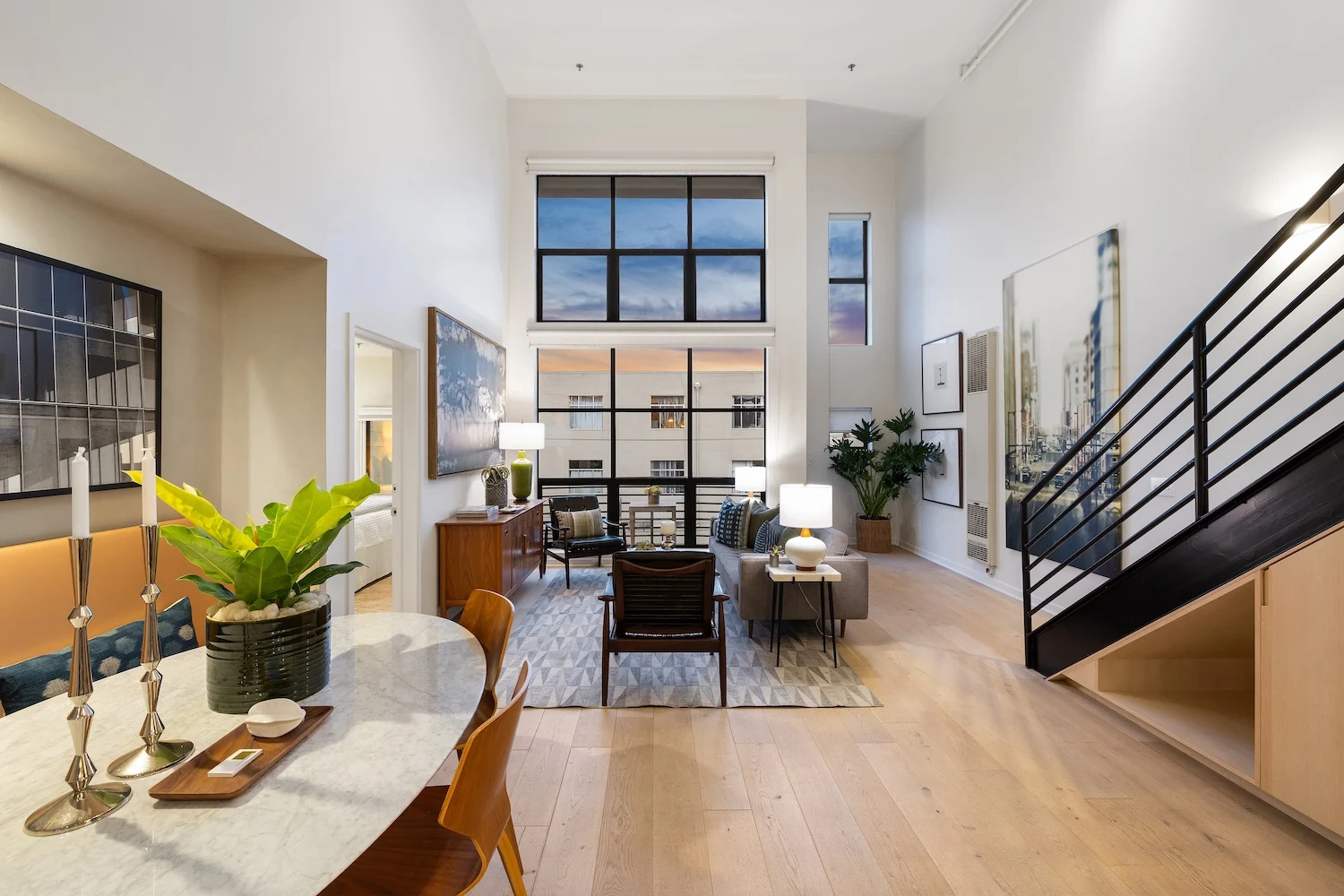
If you’ve been looking at condos and keep feeling like everything is a white box with no personality, lofts are what you’re after. The soaring ceilings, exposed plumbing, floor-to-ceiling windows, and big open layouts give you a grandeur that a standard condo just cannot get you. The tradeoff is that lofts are genuinely hard to find. Most of the city’s housing inventory is close to a hundred years old and was never built for loft conversion. Inner Mission, along with a handful of other neighborhoods, has the building stock where this product actually exists.
My team has been very active selling lofts in this neighborhood, and when I keep seeing the same area come up across multiple buyer conversations in the same week, I pay attention. That is what is happening here right now.
The three-bedroom, two-bath loft my team just sold on Harrison Street is 1,420 square feet across two levels with a private 655-square-foot roof deck, parking, and storage, and it sold in two days for $1.65 million.
I want to walk you through this unit because it is a great benchmark for what the best of this product looks like.
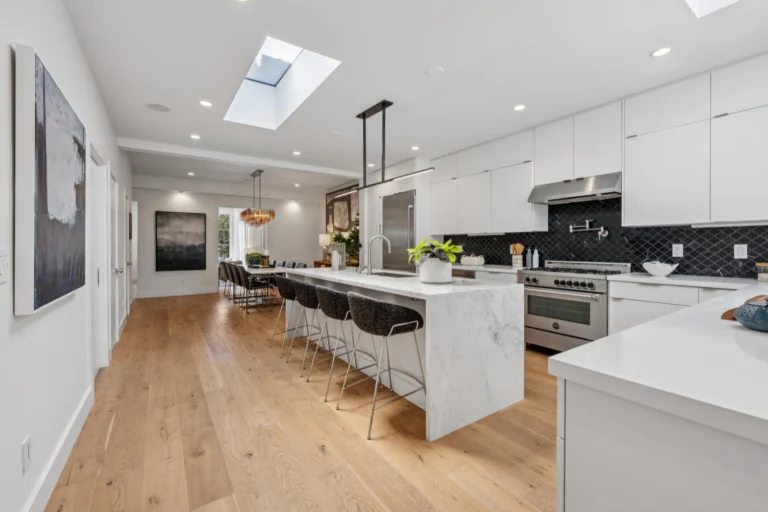
The owners renovated this for themselves, not for a quick resale flip, and you can feel the difference in every single detail. The lime wash paint treatment runs throughout the entire unit, walls and ceilings. I guarantee you walk into ten condos on an open house weekend and you are not going to find a single lime wash wall anywhere. The wide white oak flooring ties into the custom cabinetry throughout. The kitchen has a Gaggenau refrigerator and dishwasher, both panel-covered for that seamless look, a Miele cooktop, a Samsung steam oven, an induction cooktop for fast boiling, and a microwave embedded right into the island. For a three-bedroom condo under 1,400 square feet, this is a genuinely house-like kitchen. I would expect to see something like this in a single-family home.

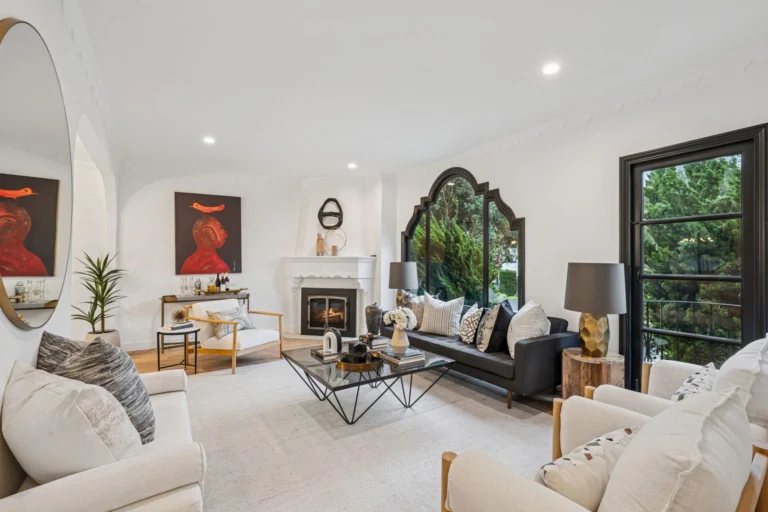
The two-story living space has floor-to-ceiling windows on both levels, which flood the unit with natural light. The primary bedroom on the upper loft level has shoji-style sliding panel doors the owners added for separation, two full closets, and a travertine-tiled bathroom. The third bedroom, the smallest of the three, has a Murphy bed built into the wall so the space can work as an office or flex room when guests are not around. There is also a half bath on the main level, which honestly makes a bigger difference than most buyers think until they are actually living there and entertaining.
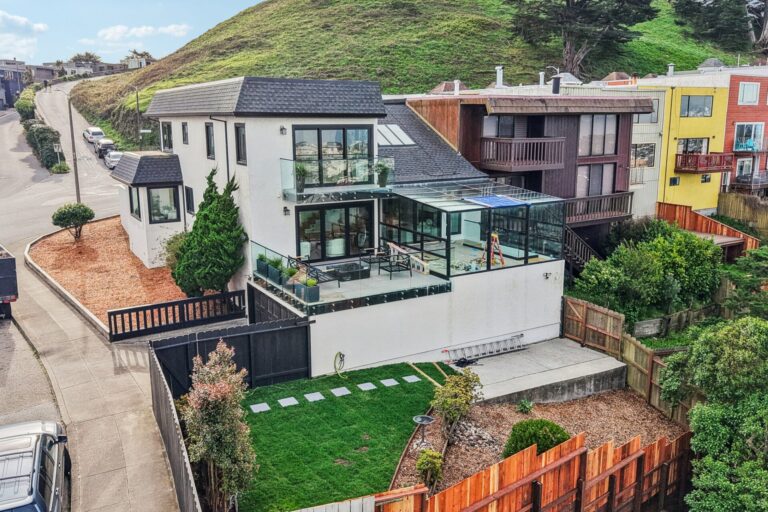
And then the roof deck. Six hundred and fifty-five square feet of private outdoor space with views of Sutro Tower and the city. That is extraordinarily hard to find on a San Francisco condo. That is a big part of why this sold in two days.


The $1.65 million sale price was an outlier because of the roof deck, the three-bedroom layout, the over-1,400-square-foot size, and a loft-level primary that actually functions like a real bedroom. The average two-bedroom in Inner Mission runs around $1.25 million.
I want to be clear about this because I think headline sale numbers can confuse buyers. That unit had a private roof deck, which is rare. It was over 1,400 square feet, which is hard to find in loft product. It had three bedrooms when most lofts are one or two. And the loft-level primary had doors installed so it works as an actual bedroom rather than just an open sleeping space. We also prepped and staged that unit beautifully. The product was exceptional and the presentation matched it. Both things had to be true to get that number.
For buyers working with a more typical budget, the average two-bedroom Inner Mission unit is running around $1.25 million. In the last six months there were 17 two-bedroom sales in this neighborhood, so there is real inventory to work with. Compare that to Noe Valley right next door where the average two-bedroom is $1.6 to $1.8 million and you start to understand why I keep bringing Inner Mission up in buyer conversations. It is a neighborhood that is genuinely a little bit on sale compared to what is right next to it.
HOA fees in a boutique Inner Mission loft building like this one run around $700 a month, which is standard for a building of this size and well below what you would pay in a large South Beach or Mission Bay high-rise.
The building my team just sold in is 9 units, built in 1996, which is actually pretty new by San Francisco standards. A lot of the city’s inventory is close to a hundred years old, so 1996 is almost modern here. At $700 a month, the HOA covers water for all units, garbage, building insurance, maintenance of common areas, and building reserves. As the owner, you pay your own PG&E, your interior walls insurance, and internet. That is pretty much it.
I always say that anything between $500 and $1,000 a month is what I consider normal for a building of this size. Fees really only climb significantly when you get into the large downtown high-rises with concierge services, doormen, and full amenity floors. This is not that. It operates like a standard condo HOA, which means no surprises. And the unit comes with parking and storage, which matters more than buyers sometimes think going in. Losing parking alone can subtract around 10% from a unit’s value. Having it here is a real advantage.
Inner Mission offers 10 out of 10 weather, two BART stations, walkable access to some of the best restaurants in the city, and a two-bedroom price point around $1.25 million compared to $1.6 to $1.8 million in Noe Valley next door.
I have been pointing buyers toward the Mission for a while now and the reasons are very practical.
Weather is the first thing I always bring up. San Francisco has 89 neighborhoods, and maybe five of them have genuinely exceptional weather. Inner Mission is right at the top of that list. And when you have 655 square feet of roof deck, weather like this means you are actually going to use it. I always use the Outer Richmond and Outer Sunset as a comparison. You can have plenty of outdoor space out there and very few days when you actually want to be sitting in it. That is not the case in Inner Mission.
Access is the second thing. Two BART stations in one neighborhood is almost unheard of in San Francisco. You can walk to the 16th Street station in about 10 minutes, and the 24th Street station is also accessible. From here you can get downtown easily, Mission Bay and the tech corridor are a breeze, and if you are commuting to the South Bay for work, getting to 101 on Cesar Chavez is very easy. I take that route myself and it is fast.
Then there is the food and the life of the neighborhood. Gus’s Community Market is two minutes away. Whole Foods is four minutes away in Potrero Hill. On restaurants, you have Flower and Water for Italian, Earnest on Bryant, which is Michelin-starred and absolutely worth going to, Tartine Manufactory, and the entire length of Valencia Street, which draws people from all over the city on weekends. I love that about the mission. People come here because they want to be here, not just because they live here. If you are in a cool loft, your friends will be coming to you.
The other thing I genuinely appreciate about Inner Mission is the community. This is not just a neighborhood of new transplants who arrived for tech jobs. It is a real mix of generations. People who have been here for decades and people who have arrived recently. That blend of deep roots and new energy is something you feel when you walk the neighborhood, and it is honestly pretty rare.
The two main drawbacks to Inner Mission are the lack of a big walkable park within the neighborhood itself, and the mixed industrial and residential character that makes it feel less purely residential than somewhere like Noe Valley or Bernal Heights.
I think it is really important to be honest about this. Not every neighborhood is the right fit for every buyer and I would rather tell you that now than have you buy somewhere and feel like I oversold it.
On green space: Dolores Park is nearby but it really belongs more to Eureka Valley and the Mission Dolores area than to Inner Mission proper. Within Inner Mission itself, green spaces are small and scattered. If a big walkable park for your dog or your morning run is genuinely important to you, there are neighborhoods that serve that better and you should probably look there.
On character: unlike Noe Valley, which is a clearly residential neighborhood with one main commercial strip on 24th Street, Inner Mission has commercial and industrial uses mixed throughout the blocks. Some buyers love that energy and find it exciting. Others want a cleaner separation between where they live and where the activity is. If a quiet, uniformly residential feel matters a lot to you, Inner Mission is probably not the right fit and I would rather tell you that upfront.
If neither of those is a dealbreaker, I think what Inner Mission offers at this price point is genuinely hard to beat.
Loft product in San Francisco is concentrated in only about three neighborhoods, and right now Inner Mission offers the best combination of price, walkability, weather, and access of the three.
I am not going to spell out the other two here because that is really a conversation worth having in person based on your specific budget and what matters to you. What I will say is that if you are set on a loft, you need to be working with someone who actually knows where the inventory exists and how individual buildings compare. That knowledge makes a real difference when something comes on the market and you have to move fast.
What I can tell you is that Inner Mission loft buyers right now are getting industrial character, high ceilings, great weather, and strong transit at pricing that is about 30% below what they would pay in Noe Valley for a comparable unit. The buyer my team is currently working with found us on YouTube, spent a couple of months searching, and then narrowed his focus entirely to Inner Mission lofts. When buyers actually do the math on this neighborhood, that tends to be where they land.
If you want to talk through what is available and what makes sense for your specific situation, reach out to us we’d love to help you.