St. Francis Wood is one of my favorite overlooked neighborhoods in San Francisco, and it is one of only a few master-planned communities in the city. What you get here are tree-lined streets, beautifully detached homes with a grandeur that rivals Pacific Heights and Presidio Heights, and a private neighborhood park with tennis, basketball, and a playground for residents only, all at prices that can save buyers $1 to $2 million. Most homes are trading between $3.5 and $5.5 million, and only 13 homes sold here last year. When a turnkey home comes up in this neighborhood, it is genuinely rare. I just toured one that is the most beautifully finished home I have seen in a long time.
St. Francis Wood is one of San Francisco’s only master-planned communities, with detached homes, tree-lined streets, a private residents-only park, and architectural scale that rivals Pacific Heights at prices between $3.5 and $5.5 million.
I always say there are neighborhoods in San Francisco that buyers just haven’t discovered yet, and St. Francis Wood is at the top of that list. The homes here have a grandeur that in neighborhoods like Pacific Heights or Presidio Heights would put them well over $10 million. Here they are trading between $3.5 and $5.5 million. That gap is real and it is genuinely not talked about enough.
What makes it physically different from most of the city is the lot width. Most San Francisco lots are 25 feet wide. Here they are 40 feet wide. You feel that the moment you walk in. Light comes in from all sides. The homes are detached. The streets are lined with mature trees. There is a private park for residents only with a tennis court, basketball court, and playground. The neighborhood was developed with a master plan and an active HOA has kept it consistent and beautiful ever since.
Only 13 homes sold here last year. That thin inventory means that when a home comes up that is genuinely done well, you need to be in a position to move.
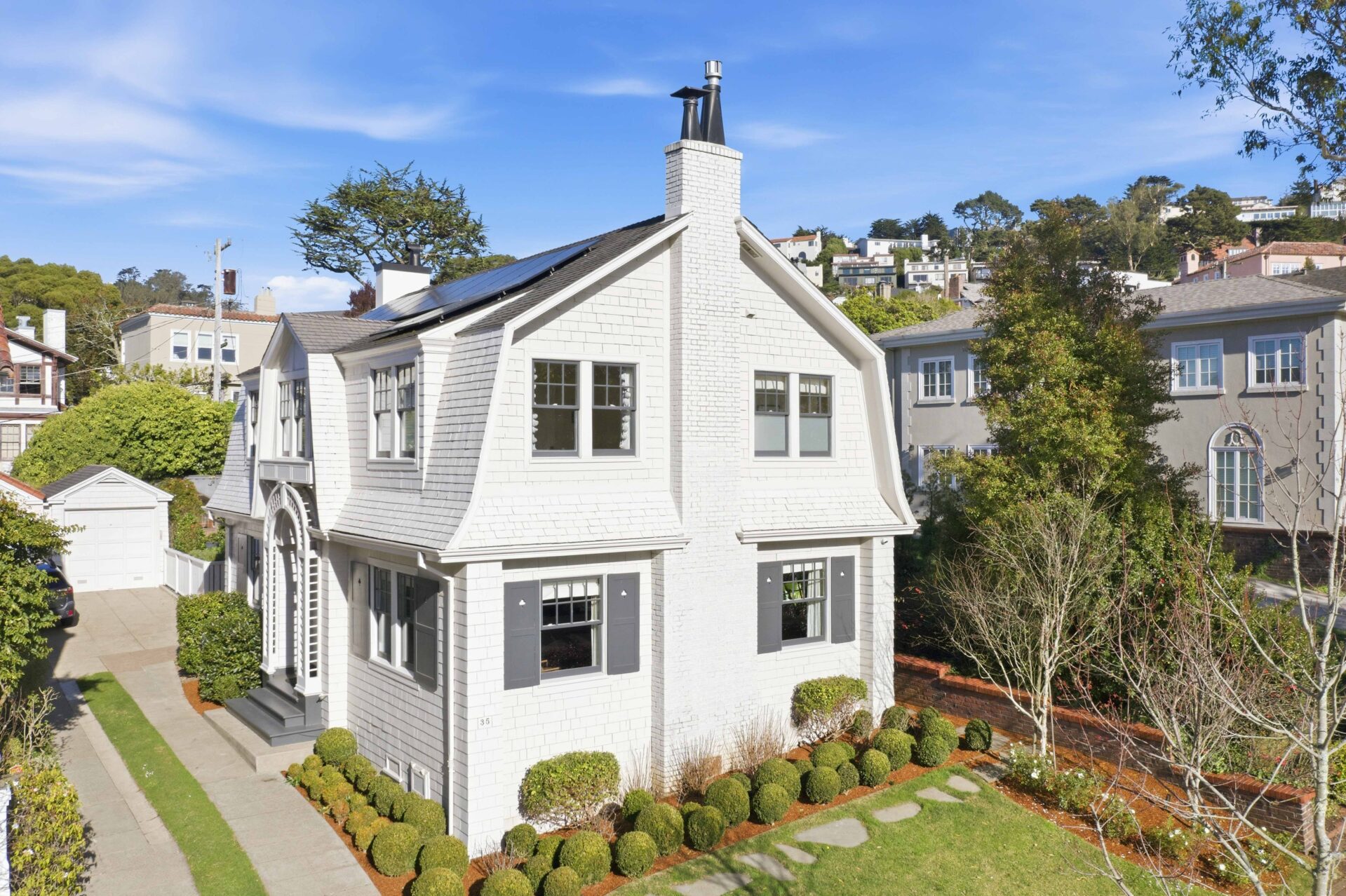
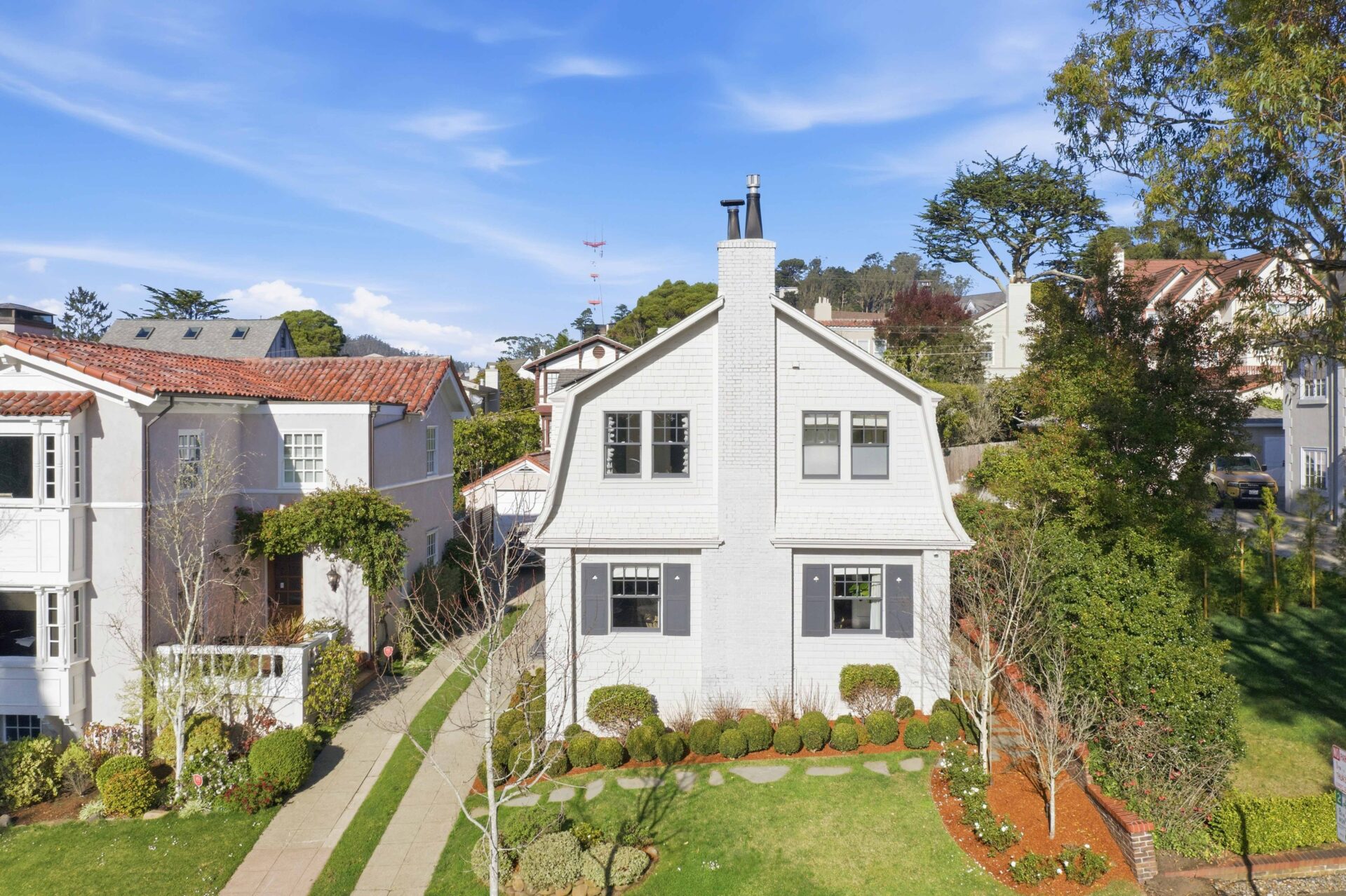
This home on Yerba Buena St. is a rare turnkey Dutch Colonial finished to a standard most buyers only encounter in $10 to $20 million new construction, because the seller is a residential contractor who renovated it entirely for herself.
Most homes that come to market in St. Francis Wood need real work. I want to be direct about that because I think buyers sometimes assume everything here is move-in ready. It is not. The architectural bones are beautiful across the board, but finding a home finished at this level is genuinely uncommon.
The seller works on residential construction projects ranging from $10 to $20 million. She did not bring in a flipper’s budget or a flipper’s vendors. She brought in the same people she works with every day and made every decision as someone who was going to live there. You feel that throughout the entire home.
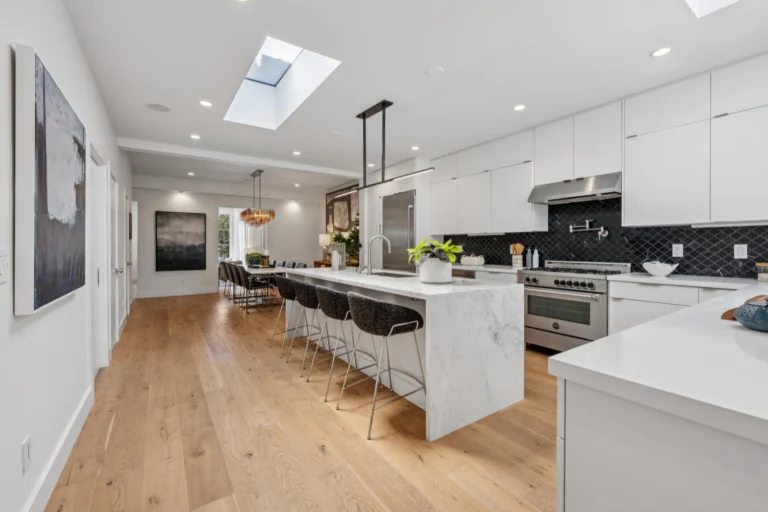
One example that tells you everything: the Carrara marble. It is beautiful and it is porous, which means it stains easily. A lot of renovators use it everywhere because it photographs well. She put it on the backsplash where it looks stunning and chose Caesarstone on the working countertops where you actually need durability. That is the difference between someone decorating for resale and someone building for real life.

The home was built in 1918. She went through the expense of having all the paint fully stripped and redone by a high-end painter, not just rolled over decades of buildup. The original woodwork, the original doors, the hardwood floors throughout, all of it is intact and now looks the way it was always supposed to look.
The Dutch Colonial gives you spacious, symmetrical rooms on the main level and real bedroom-level volume upstairs, because the gambrel roofline creates height that Victorian-style homes in San Francisco simply do not have.
If you are not familiar with a Dutch Colonial, the easiest way to spot one is the roofline. It slopes more gently than a Victorian and looks a little like a barn from the outside. That roofline is not just aesthetic. It creates real volume on the bedroom level instead of the compressed, attic-like feeling you often get upstairs in older San Francisco homes. The symmetry and openness inside feel completely different from a railroad Victorian.
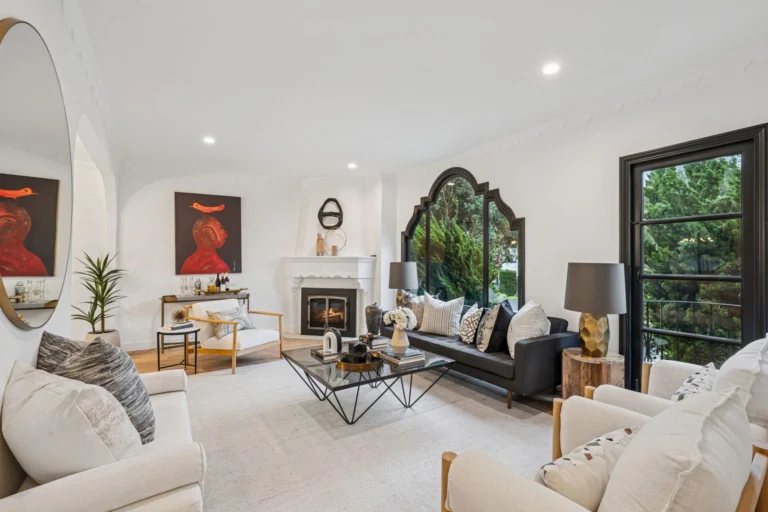
On the main level, the entry gives you a choice: left into the dining room or right into the formal living room. The living room has a gas fireplace, good ceiling heights, and light on all sides. From there you move into the great room, and I have to tell you this is one of the best great rooms I have seen in my career. The kitchen is designed for someone who actually cooks. The refrigerator and dishwasher are fully integrated into the cabinetry so nothing looks like an appliance. There is a high-end induction range, a built-in appliance garage that hides countertop appliances when not in use, and a pantry with pull-out shelving that is properly thought through.


The laundry is tucked into a walk-through space between the kitchen and the powder room. You never see it but it is right there. These are the details that make a home actually easy to live in.
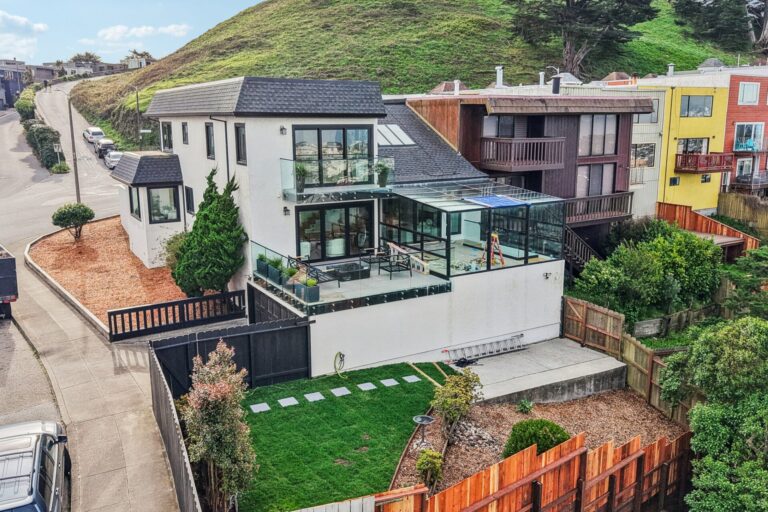
The great room opens directly to a flat walk-out backyard. The outdoor seating area has heated chairs with individual electrical plugs at each one. There is a small greenhouse off the back. The dining room has an original built-in hutch and the kitchen hutch echoes it deliberately. Again, someone thought about this.

Upstairs, the bedroom level has the ceiling height and volume you would expect from the Dutch Colonial roofline. The primary suite has heated floors, a rainfall shower, a soaking tub, a skylight in the dressing room, and custom-fitted closets. There is also a large basement with great storage that flows well enough that I would not be surprised to see a future owner convert it into a family room. The foundation is in great shape. It would require digging for ceiling height, but the bones are there.


St. Francis Wood homes trade between $3.5 and $5.5 million with an HOA of about $3,500 a year. West Portal is three blocks away and averages $2.5 to $3 million. Forest Hill mirrors the price and architecture but has no HOA and a more varied streetscape.
The HOA here is one of the more active neighborhood associations in San Francisco. Any exterior changes to your home or yard go through an architectural review. That process is a big part of why the neighborhood looks as consistent and beautiful as it does. The $3,500 annual fee covers the shared green spaces, two fountains, and the private park. It is not a burden, and the result speaks for itself every time you walk the streets.


West Portal, just a few blocks away, is the natural starting point for buyers who want the same walkability and transit access at a lower price. Average homes there are closer to $2.5 to $3 million. The homes are smaller and do not have the architectural scale you get in St. Francis Wood, but the commercial strip and the Muni are the same. Forest Hill, which is a bit further west, prices close to St. Francis Wood with a slight discount because there is no HOA. The streets are more winding and hilly, the architecture is less homogeneous, but it is a genuinely beautiful neighborhood and worth considering if St. Francis Wood feels just out of reach.
If you walk east out of St. Francis Wood you hit Monterey Heights and Westwood Highlands, which feel like a smaller, more affordable version of the same character. Balboa Terrace is also close by and worth understanding if budget is a factor. We have done full videos on all of these neighborhoods.

St. Francis Wood is roughly a 6 out of 10 on the San Francisco weather scale, and that is part of what keeps prices lower than sunnier neighborhoods. I always tell buyers this upfront because it matters.
I have held open houses here on days that were absolutely beautiful and I have held them when there was mist settling on my glasses. You are going to see that kind of day about 60% of the time. This is not a neighborhood you move to for guaranteed sun. The whole southwest side of the city shares a similar weather pattern.
I always tell buyers that in San Francisco real estate, you pay about 20% for sun and another 20% for walkability. St. Francis Wood has real walkability. It does not always have the sun. That tradeoff is exactly what makes the price what it is. If you can make peace with it, this neighborhood delivers a tremendous amount of value.
West Portal is a 5 to 15 minute walk from most of St. Francis Wood and I think it rivals 24th Street in Noe Valley. The Muni underground station gets you downtown fast and you can be on the 280 in about 10 minutes.
West Portal has been making a real comeback. There is a pizza place that has been here forever and does slices, a great Indian roti spot that has been a neighborhood staple for as long as I can remember, Elena’s which is a newer Mexican restaurant that feels like it belongs in a different city and is always packed, Uncorked for wine after work, a great sub shop, Noe Valley Bakery right across the street, and George’s Donuts which has developed a real following. Someone brought a box to my open house last week and now I completely understand why. Little Joe’s opened further down the strip as well. You also have a Walgreens, a post office, a One Medical I use personally, and for groceries Molly Stone’s just up Portola plus Trader Joe’s and Whole Foods at Stonestown a short drive away.
The Muni station here goes underground, which makes it noticeably faster than the above-ground lines. Most people who live here use it rather than driving downtown. And if you work on the Peninsula, getting to the 280 in 10 minutes from here is a real advantage. If you were in Pacific Heights trying to do the same commute, you would be 40 minutes into traffic before you even reached the freeway.
Stern Grove is about a 6-minute walk with free summer concerts that are genuinely worth going to. Mount Davidson Park is right nearby for trails and green space.
With only 13 homes selling per year and buyers in San Francisco currently averaging 10 offers before getting into contract, being informed and ready to move is the difference between getting in and watching it happen.
I want to be real about what it looks like out there right now. We have buyers who started with a $4 million budget and are now buying at $6.5 million for essentially the same home. The market has moved that much. I genuinely empathize with buyers going through this.
That said, St. Francis Wood is still one of the more compelling value stories in the city. There is another home on the market right now listed at $4 million. It photographs beautifully but I walked through it yesterday and the renovation is cosmetic. The kitchen cabinets are about 40 years old and were painted over. New countertops and tile were layered on top. It is a trust sale and the listing agent did the best they could with the budget they had. The person who buys it will either live with it for a while or rip it out eventually. That is a very different purchase from Yerba Buena, which is listed at $3.5 million and is genuinely done.
Those two homes sitting on the market at the same time tell you a lot about the range and what different price points actually get you here.
My team rarely writes more than two offers before getting a buyer into contract. The average buyer in this market is writing ten. If you want to talk through what is available in this neighborhood and how to approach it, please reach out.