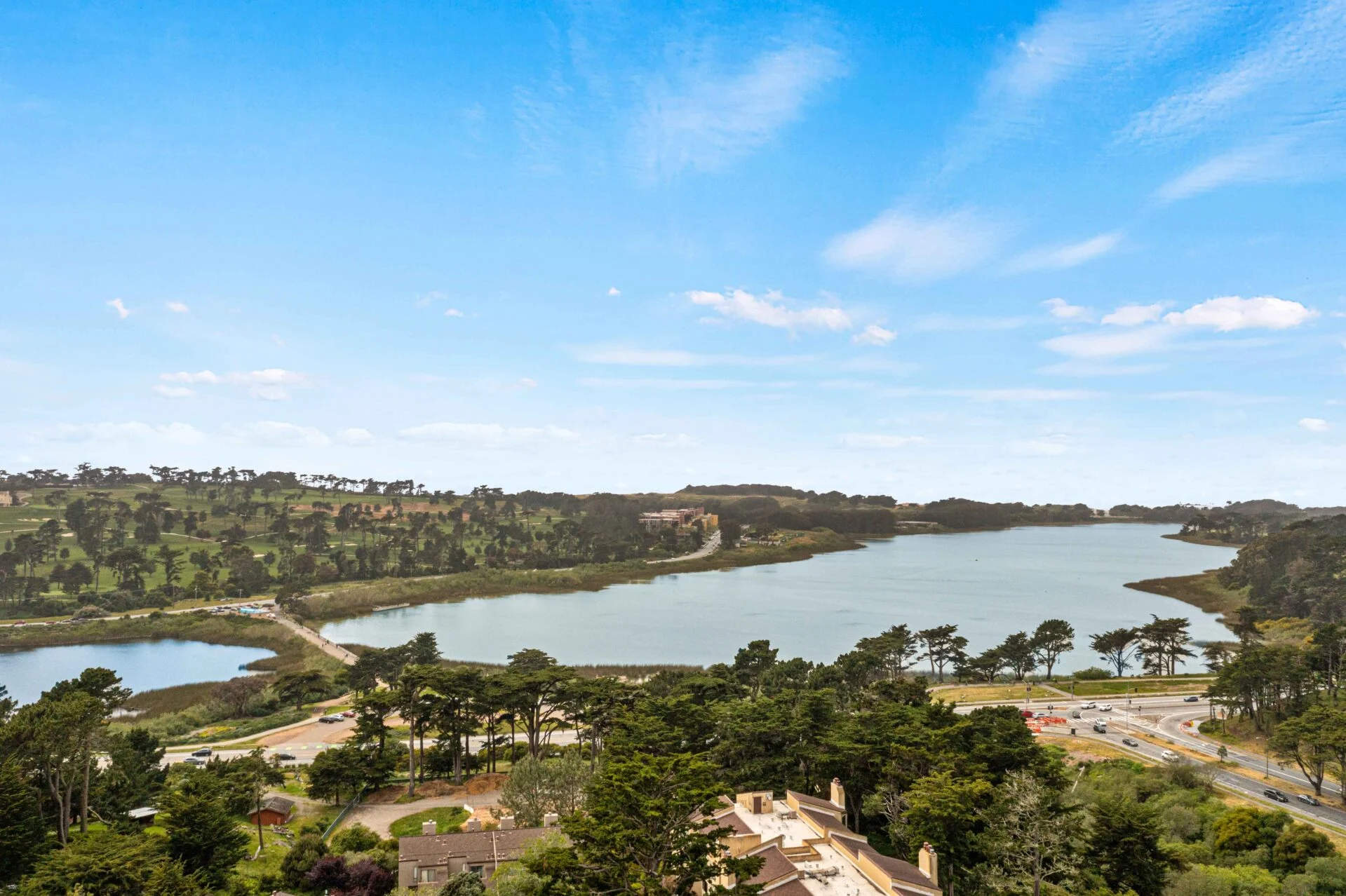
Lakeshore is a quiet, outdoor-focused San Francisco neighborhood wrapped around Lake Merced, where you’re within 10 minutes of the lake, Fort Funston, Ocean Beach, and two of the city’s best golf courses. Smaller 1950s homes of 1,000 to 1,500 square feet trade for around $1.5 million, while larger 1980s and 1990s homes of 2,200 to 3,000 square feet run roughly $900 to $1,000 per square foot, or about $2.2 to $3 million. For buyers who’ve been priced out of sunnier, more walkable neighborhoods like Noe Valley or Bernal Heights, it’s one of the last centrally accessible pockets where your money still stretches.
Lakeshore is a residential neighborhood on the far west side of San Francisco, wrapped around Lake Merced and bordering the ocean, and it’s one of the last neighborhoods before you leave the city. Here’s how honest I’ll be with you: in more than a thousand transactions over 17 years in this business, I had never sold a house in this neighborhood, and I didn’t even know it well until recently.
That changed last season, when I was at the park at Lake Merced for my son’s cross country practice. I do what I normally do, which is walk around while he runs, and I found myself looking across at the houses surrounding the lake, wondering what they were and realizing I’d never worked here. So I started digging in to find out whether something was wrong with it or whether it was just one of the best-kept secrets in the city. You’ve got the ocean on one side, SF State and Stonestown nearby, and neighborhoods you may have heard of close by, including Pine Lake Park, Parkside, and West Portal. One of the streets that wraps around it, Skyline Boulevard, heads right into Pacifica. If you’re curious what’s actually out here, keep reading, or reach out to us and we’ll walk you through it.
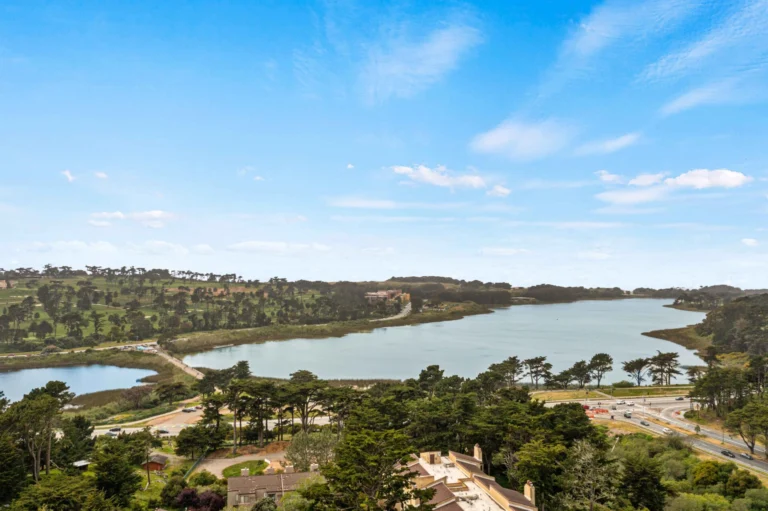
Lakeshore may be the best neighborhood in San Francisco for access to the outdoors, with the lake, Fort Funston, Ocean Beach, and top ranked golf courses all within about 10 minutes. It’s genuinely rare to get something that feels this outdoor-active, with the beach, the golf course, and a lake all right there to roam around.
The lake itself has about a four-and-a-half-mile loop that you can walk or run, plus paddle boarding and fishing. There’s a 20,000-square-foot clubhouse in the park where neighbors come to have dinner. For golf, you have Harding Park and the Olympic Club right here, and Harding Park hosts one of the biggest golf tournaments in the United States. Fort Funston is a short distance away, an awesome place to watch hang gliders launch off the cliffs and ride the coast, and it has a trail system where you can walk down to Ocean Beach or head south toward Mussel Rock, anywhere from about a mile and a half up to four or five miles depending on which way you go. There’s also the San Francisco Zoo, which has one of the best playgrounds in the city and steam engine trains my two boys always loved when they were little. And down at the beach, the stretch of the Great Highway that closed permanently last year is now Sunset Dunes, which fills up on weekends with bikers and people spending the day outside. If being able to walk out your door into all of this sounds like your speed, let’s talk about what’s available here.


Homes in Lakeshore fall into two clear categories, with smaller 1950s houses starting around $1.5 million and larger, newer homes running roughly $2.2 to $3 million. The homes here are not sitting on the market, and they’re selling on average about 20% over asking.
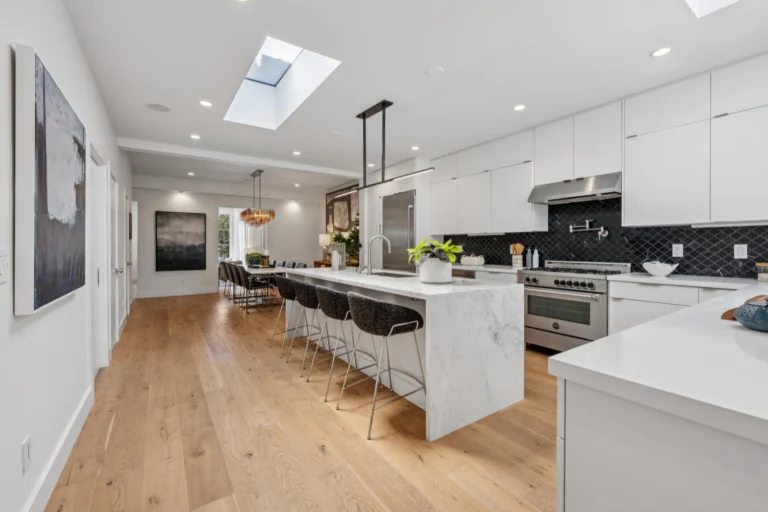
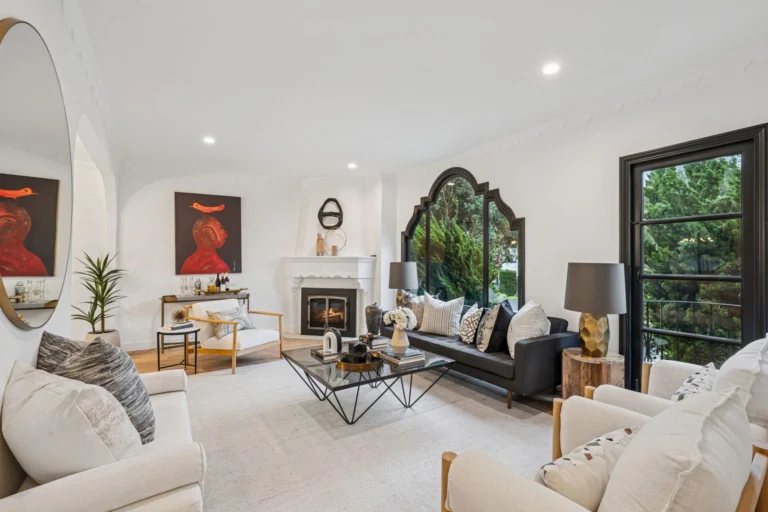
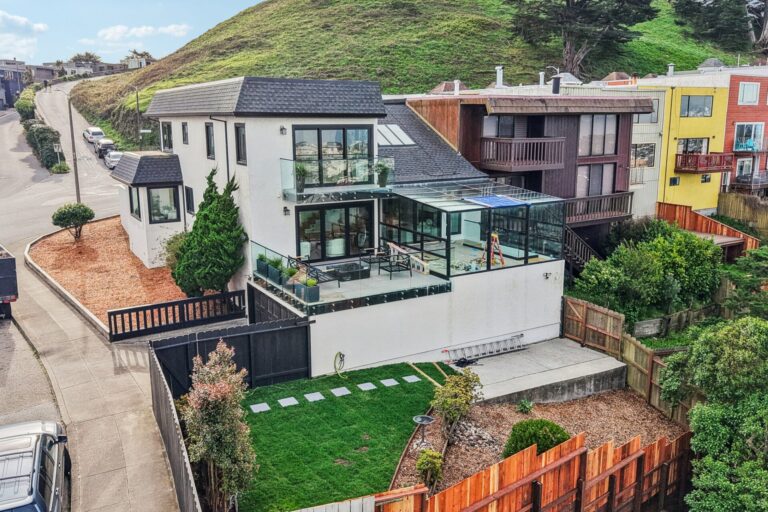
The first category is the smaller homes, generally 1,000 to 1,500 square feet, built as part of the 1950s development. For one of these you can expect to pay around $1.5 million, which is pretty good for a two-to-three-bedroom house in San Francisco, and many sit on quiet, looping streets as detached homes. The second category is the bigger homes, roughly 2,200 to 3,000 square feet, built in the 1980s and 1990s with more updated, gracious, open floor plans. Those run around $900 to $1,000 per square foot, so depending on size, somewhere between $2.2 and $3 million. This whole area was originally sand dunes and eucalyptus trees before it was developed, largely for postwar veterans, in the 1950s. If you want help figuring out which category fits your budget, reach out and we’ll map it out with you.

In Lakeshore, a home that trades for $2 to $3 million could cost $4 to $5 million in another neighborhood at the same size, which is the core reason to look here. That’s the trade we’re seeing right now, and it’s meaningful money.
A lot of our buyers have been priced out of sunnier, more walkable neighborhoods and are already looking west, even though Lakeshore usually isn’t on their original search list. When you compare it directly, you can save anywhere from $500,000 to up to a million dollars, sometimes more, over a neighborhood like Noe Valley, and still get a bigger house where your money stretches further. The tradeoff is that neighborhoods like Noe Valley, Bernal Heights, and Glen Park give you more sun and more walkability, which is exactly what many buyers want and what drives those prices up. If your priority is square footage and access to nature rather than paying a premium for sun and sidewalk cafes, Lakeshore is worth adding to your list. Reach out if you’d like us to run that comparison for your specific budget.
Lakeshore is best suited to buyers who want more house for their money, easy access to the outdoors, and proximity to the beach, and who are willing to trade some sun and walkability to get it. If you’re already looking in areas like Miraloma or Sunnyside, this neighborhood is right there and worth a look.
The buyers we’ve worked with heading in this western direction, whether they land in Pine Lake Park or Parkside, tend to be similar. Many would love a sunny, walkable neighborhood but either don’t want to pay what that costs or can’t, and they’re looking for a bigger house where the budget goes further. Families are a natural fit here: if you have kids and want to fill up the rooms with friends and family, one of the larger homes trading for $2 to $3 million gives you space that would cost far more elsewhere. We’ve also had surfer clients specifically because this neighborhood gives you really good access to the ocean. If any of that sounds like you, we can help you source options in an area with very little on the market.

Lowell High School sits right in the Lakeshore neighborhood, and it’s one of the top-ranked public schools in the country. If you’re from San Francisco, you know Lowell. It’s one public high school in the city that you have to test into, and being able to walk your kid to a school like that is a real advantage of living here. If you have a student who’s headed to Lowell, this is a neighborhood that should be high on your list, and we can help you find a home within walking distance.
The honest downsides of Lakeshore are the weather and the limited walkability to restaurants and coffee. I’m going to be straight with you: the weather is lacking. This is a foggy, often overcast, misty part of the city, and that’s pretty much what it looks like a lot of the time. If you’re the kind of person who wants to wake up and feel the sun on your face every day, and a string of gloomy days in a row would affect your mental health, this is probably not the neighborhood for you.
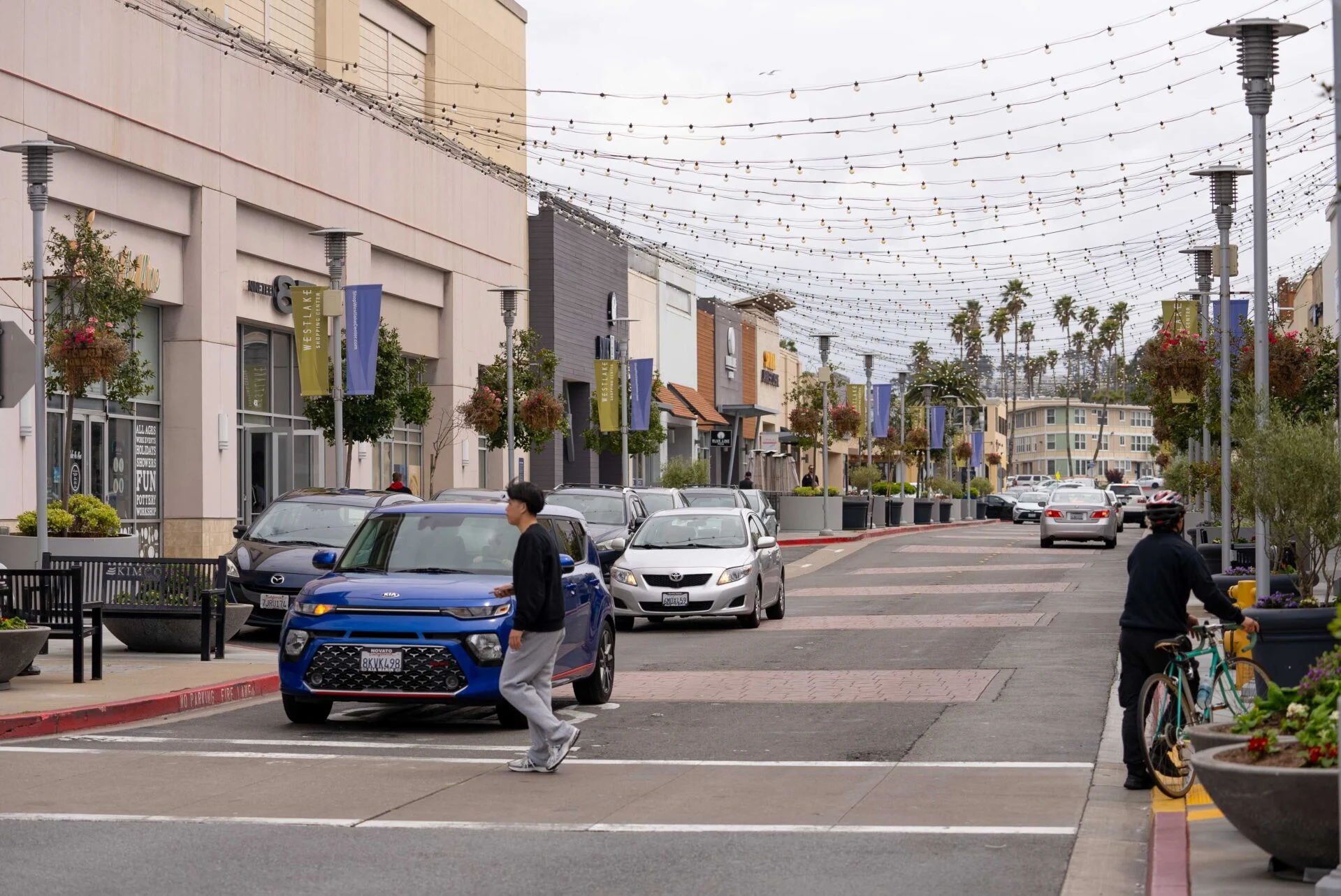
Walkability is the other tradeoff. If you want to walk to interesting restaurants and Chipotle or Wing Stop isn’t your first choice, you’ll likely need to get in the car and head to West Portal, Noe Valley, or wherever suits you. Walking to good coffee is also a little lacking. That said, there is Lakeshore Plaza, which has a supermarket, a Peet’s Coffee, dry cleaning, and other essentials, and it’s quite walkable depending on where you are in the neighborhood. If that grocery store isn’t your thing, you can drive to Stonestown, which has a Whole Foods and a Trader Joe’s along with more restaurants in the mall. If you know sun and walkability are non-negotiable for you, we’ll tell you honestly and point you toward areas like Noe Valley or Bernal instead.
You may still be able to get a deal in Lakeshore right now, because prices here likely haven’t fully caught up to where the rest of the city has moved. I’ll caution that there isn’t a lot of data to work with: there have been only five sales in the neighborhood in the last year, and in a given year there are usually somewhere between about 11 and 20 sales.
One reason data is thin is that people simply don’t leave. When I analyzed recent sales, hoping to see something that closed in 2021 or 2022 and showed a bump, I mostly found homes that had last traded 20 or 30 years ago. My read is that the neighborhood hasn’t yet come all the way back up to 2021 and 2022 prices. If you’ve followed me for a while, you know I talk about the wave: prices tend to rise from the center of the city first and then reach outer neighborhoods later, and my guess is that appreciation hasn’t fully reached Lakeshore yet. That could change at any moment, but for now, if there are deals to be had, this is a place they might still exist, which is exactly the kind of timing edge I try to help buyers find in a market where good prices are hard to come by. If you want to get ahead of that wave, reach out to us we’d love to help you..